


Every fall, Canadian drivers hear the same pitch at the dealership counter and the oil spray shop. So, is rustproofing worth it?
For most Canadians who drive through salted winters and plan to keep their vehicle more than three or four years, yes. An annual treatment costs $120 to $180, while repairing a single rusted panel can cost $500 to $2,500 or more. Rustproofing is usually not worth it for short leases, winter-stored vehicles, or cars that already have advanced structural rust.
Here is the math behind that answer.
The Cost-Benefit Math
Environment and Climate Change Canada reports that roughly five million tonnes of road salt hit Canadian roads every year, and the Automobile Protection Association notes that most owners start noticing rust around the five to six year mark. If you keep your car past that point, prevention works in your favour long before the first bubble appears in the paint.
Suggested citations: Environment and Climate Change Canada, Road Salts Overview; Automobile Protection Association, Rustproofing.
| Prevention vs repair | Typical cost (CAD) |
|---|---|
| Annual oil-based treatment | $120 to $180 per year |
| Eight years of annual treatments | $960 to $1,440 total |
| Rocker panel replacement (per side) | $500 to $1,500 |
| Wheel arch or quarter panel repair with paint | $800 to $2,500 |
| Corroded brake or fuel lines | $500 to $1,200 |
| Structural frame or subframe repair | $2,000 to $5,000+ |
If eight years of treatments prevent even one rocker panel replacement and keep your brake lines intact, the program has already paid for itself. Preserved resale value and passing a safety inspection at sale time are return on top.
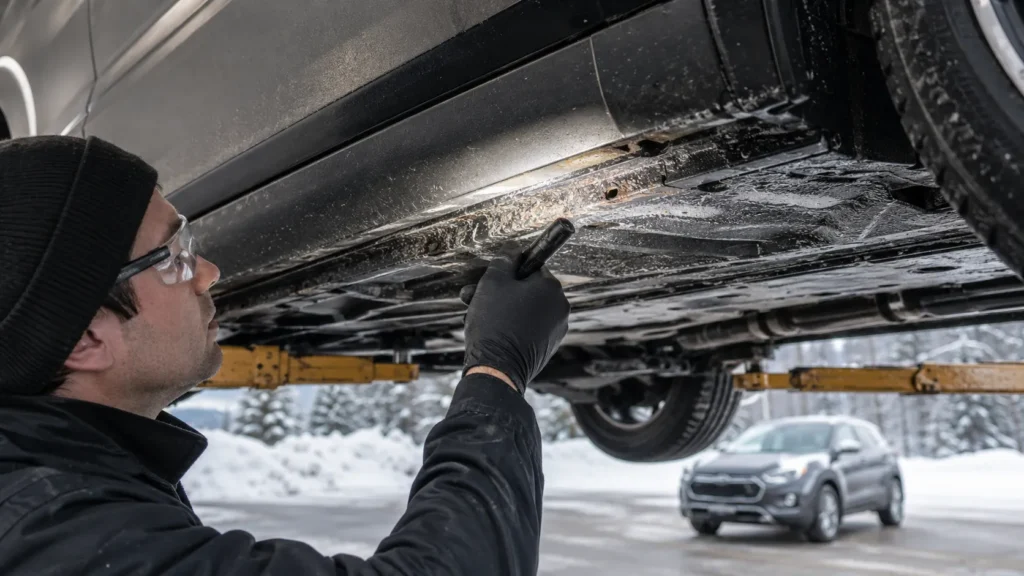
When Rustproofing Is Worth It
- Daily driver in a salted region, kept five years or more
- Used vehicle you plan to run into high kilometres
- Truck or SUV on rural, gravel, or highway routes
- Vehicle you intend to sell privately in Ontario or Quebec, where rust can complicate safety certification and cut offers
- Coastal Atlantic regions where salt air keeps corrosion active year-round
When Rustproofing Is Not Worth It
Short leases. A two to four year lease ends before rust would appear on a modern car. Factory protection covers that window; winter washes are enough.
Winter-stored summer cars. No salt exposure means no urgency. Periodic inspection is sufficient.
Vehicles with advanced structural rust. Spraying over corroded frame rails hides the problem without fixing it. Assess and repair first. Rustproofing prevents corrosion; it never reverses it.
Overpriced dealership packages. The treatment may be legitimate, but the price usually is not.
Dealership Packages vs Independent Shops
Dealerships commonly bundle rustproofing into finance-office packages priced at $800 to $1,500, sometimes rolled into the loan where it also accrues interest. Independent shops charge $120 to $180 for a thorough annual oil spray that reaches door cavities, rocker panels, seams, and the full undercarriage. Applied yearly, the independent route costs less over several years than one dealership package.
Be especially cautious with electronic rust modules. The technology was designed for submerged marine structures, and independent evaluations have not shown meaningful protection on road vehicles. You can always decline at delivery and buy proper protection independently later.
Is Rustproofing a Car Worth It When It Is New?
New vehicles leave the factory with strong corrosion protection, and most manufacturers include corrosion-perforation warranties. Some, including Toyota Canada, state that aftermarket rust products are not required to keep that warranty, so read your own warranty booklet before paying anyone.
The practical rule: if you plan to keep the vehicle well past the warranty in a salt-heavy region, starting annual treatment early on clean metal gives the best long-term result. For short-term ownership, factory protection is generally adequate.
Suggested citation: Current manufacturer corrosion warranty documentation.
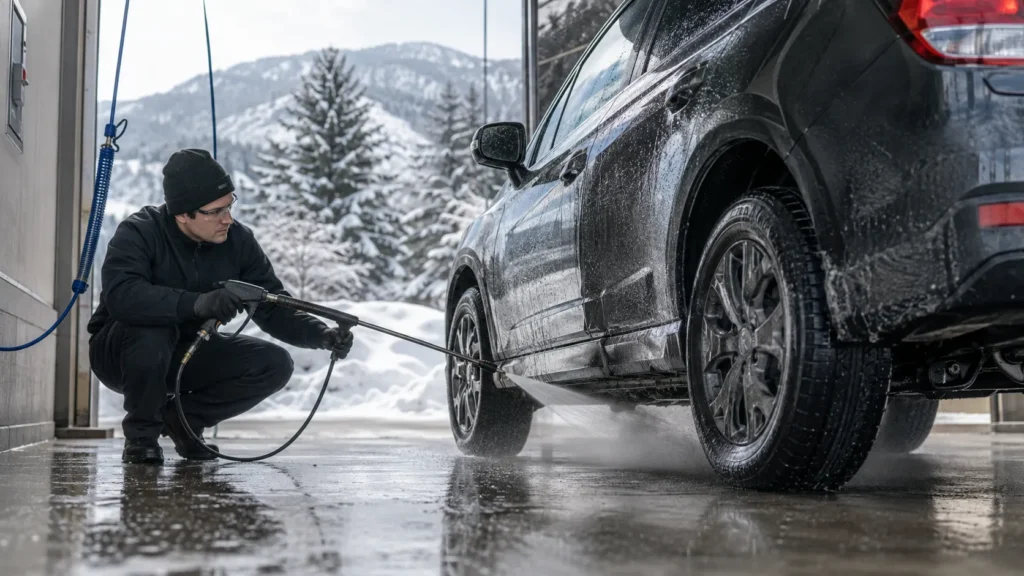
Getting Full Value From the Treatment
Buy the right product, then keep the schedule. Timing depends on the product type and your driving conditions, and we break the full decision down in our guide on how often should you rustproof your car. Between treatments, wash the undercarriage regularly through winter, fix paint chips promptly, and book an inspection after each salt season.
The Verdict
Is rustproofing worth it? For the typical Canadian driver, yes. Spend $120 to $180 a year with an independent shop that sprays cavities properly, keep the salt washed off between visits, and rustproofing becomes one of the highest-return maintenance decisions a Canadian car owner can make. Skip it only for short leases, stored vehicles, vehicles that need rust repair rather than prevention, and inflated one-time packages.
Frequently Asked Questions
Is rustproofing worth it in Canada?
Yes, for most drivers. Canadian roads receive about five million tonnes of salt each winter, and repairing rust costs several times more than preventing it. It delivers the most value on vehicles driven through salted winters and kept five years or longer.
How much does rustproofing cost in Canada?
Annual oil-based treatments at independent shops generally cost $120 to $180. Dealership packages often run $800 to $1,500 and rarely justify the premium.
Is dealership rustproofing worth it?
Rarely at typical package pricing. Independent shops deliver comparable or better annual protection for a fraction of the cost, and you can add it any time after purchase.
Is rustproofing worth it on a used car?
Often yes, if the underside is inspected first. Clean or lightly rusted metal benefits from starting a program. Advanced structural rust needs repair before any coating is applied.
Does rustproofing help resale value?
It helps preserve it. Visible rust lowers offers, structural corrosion can fail a safety inspection at private sale, and documented annual treatments reassure buyers the vehicle was maintained.
Do electronic rust protection modules work?
Independent evaluations have not shown meaningful protection on road vehicles. A properly applied oil or wax treatment remains the reliable choice.