


Yes, quality tinted car windows can block UV rays, but the level of protection depends on the type of glass, the tint film, and whether the product is designed for UV protection. Many high-quality automotive window films can block up to 99% or more of UVA and UVB rays, while ordinary factory glass or dark privacy glass may offer less complete protection.
Tint can help protect passengers, reduce interior fading, and improve comfort, but it should not replace smart sun protection habits during long drives.
Quick Answer: Do Tinted Car Windows Block UV Rays?
Yes. Tinted car windows can block UV rays when the film is designed for UV protection. However, not every dark window tint provides the same protection. A light or clear UV-blocking window car tint may protect better than a cheap dark film if it has stronger UVA and UVB rejection.
| Window or Film Type | UV Protection Level | What Drivers Should Know |
|---|---|---|
| Laminated windshield glass | Usually stronger than side glass | Often blocks much UV naturally, but performance varies |
| Untinted side windows | Often weaker against UVA | Side-window exposure can still matter during long drives |
| Factory privacy glass | Mostly darkens glass | May reduce glare but may not provide full UV protection |
| Dyed window tint | Basic protection | Performance varies by product quality |
| Carbon tint | Good protection | Often better durability and heat control |
| Ceramic tint | Strong protection | Often chosen for UV, heat, clarity, and comfort |
| Clear UV film | Strong protection without dark look | Useful where dark front tint is restricted |
Why UV Rays Matter Inside a Car
Ultraviolet radiation is invisible energy from the sun. The two main types drivers hear about are UVA and UVB.
UVA Rays
UVA rays have a longer wavelength and can penetrate deeper into the skin. They are strongly linked with skin ageing and long-term sun exposure concerns. UVA rays are important for drivers because they may pass through some side-window glass more easily than UVB.
UVB Rays
UVB rays are shorter and are strongly linked with sunburn. Many types of vehicle glass block UVB better than UVA, but performance can vary.
Why This Matters for Drivers
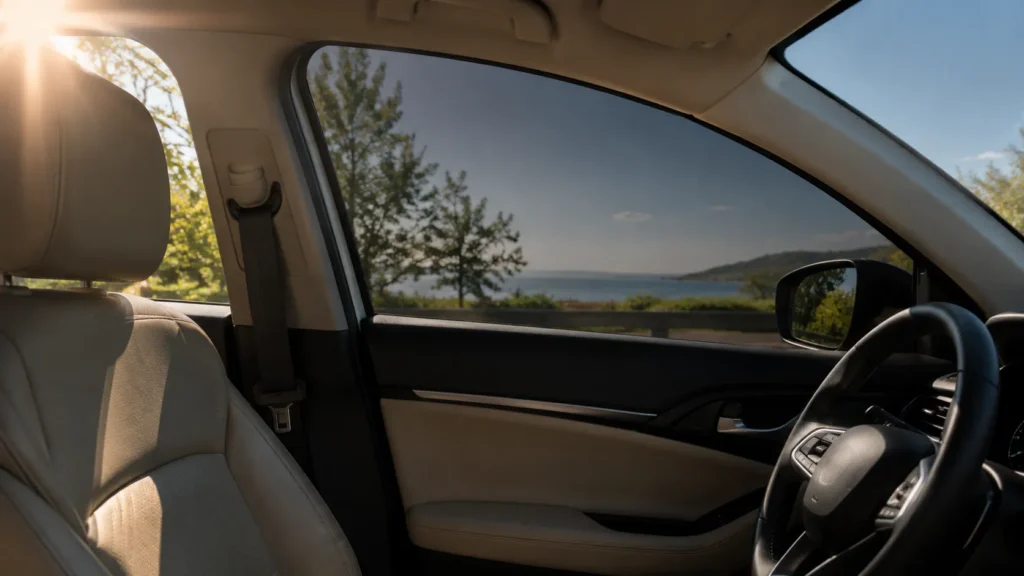
Many people assume that sitting inside a car means they are fully protected from the sun. That is not always true. The windshield, side windows, and rear glass do not always block UV rays equally. Long commutes, road trips, and daily driving can add up over time, especially when the sun hits one side of the body regularly.
Citation placeholder: Add a dermatology or cancer-prevention source here explaining UVA, UVB, and sun exposure while driving.
Does Regular Car Glass Block UV Rays?
Regular car glass blocks some UV rays, but protection varies by glass type.
Windshield Glass
Most windshields are made from laminated glass. Laminated glass usually has a plastic layer between two glass layers, which can improve UV protection. This is one reason the windshield often blocks more UV than side windows.
Side and Rear Windows
Many side and rear windows are made from tempered glass. Tempered glass is strong and shatter-resistant, but it may allow more UVA transmission than laminated windshield glass. This is why drivers may still receive sun exposure through the side windows.
Factory Privacy Glass
Factory privacy glass is often found on rear windows of SUVs, vans, and trucks. It makes the glass darker, but darkness alone does not always mean strong UV protection. Some factory privacy glass mainly reduces visible light and glare, while aftermarket film may add stronger UV and heat rejection.
Do Tinted Car Windows Block UVA and UVB?
Yes, the right tint can block both UVA and UVB rays. However, the key phrase is the right tint.
A high-quality UV-blocking film is usually designed to reduce a broad range of ultraviolet radiation. A basic dark film may make the window look darker but may not provide the same tested UV protection.
When choosing tint, look for product specifications such as:
- UVA rejection
- UVB rejection
- Total UV rejection
- VLT, or visible light transmission
- Infrared rejection
- Total solar energy rejected
- Film warranty
- Manufacturer data sheet
Do not judge UV protection by shade alone.
Does Darker Tint Block More UV Rays?
Not always. This is one of the most common misunderstandings about car window tint.
A very dark, low-quality dyed tint may reduce brightness but still offer weaker UV performance than a high-quality lighter ceramic film. A clear UV-blocking film may provide strong UV protection without making the window look dark.
The important question is not only “how dark is the tint?” The better question is:
What percentage of UVA and UVB rays does this film block?
Window Car Tint Types for UV Protection
Different tint types can offer different levels of UV protection, heat control, durability, and appearance.
Dyed Window Tint
Dyed tint is usually the most affordable option. It can reduce glare and add privacy, but UV protection and long-term durability vary by product quality. Cheaper dyed films may fade faster over time.
Best for: basic appearance and glare reduction.
Main limitation: lower performance than premium films in many cases.
Carbon Window Tint
Carbon tint is often more durable than basic dyed tint and can provide good UV protection, heat reduction, and a clean appearance.
Best for: drivers who want a balance of performance and cost.
Main limitation: usually not as advanced as premium ceramic film.
Ceramic Window Tint
Ceramic tint is often one of the best choices for UV protection, heat rejection, and visibility. It can block UV rays without needing to be extremely dark.
Best for: UV protection, heat control, comfort, and long-term value.
Main limitation: higher upfront cost.
Clear UV-Blocking Film
Clear UV film is useful when a driver wants UV protection without changing the appearance of the vehicle much. It can be helpful for front side windows or windshields where darker tint may be restricted.
Best for: UV protection with a nearly factory-clear look.
Main limitation: may cost more than basic film and must still follow local rules.
UV Protection vs Heat Rejection: What Is the Difference?
UV protection and heat rejection are related, but they are not the same.
UV protection refers to how well the film blocks ultraviolet rays. This matters for skin exposure and interior fading.
Heat rejection refers to how well the film reduces solar heat, especially infrared heat. This matters for cabin comfort and how hot the car feels.
A good film may offer both, but you should still check the film specifications. Some films are stronger for heat, some for UV, and premium films often perform well in both areas.
For more on heat reduction, read this does tinted windows keep car cooler.
Can Tinted Windows Help Protect Car Interiors?
Yes, UV-blocking car window tint can help reduce interior fading and material wear. Sun exposure can affect dashboards, leather seats, fabric upholstery, door panels, steering wheels, and plastic trim.
Tint may help protect:
- Dashboard surfaces
- Leather seats
- Fabric seats
- Door panels
- Interior plastics
- Steering wheel material
- Electronics
- Carpets and mats
- Child seats and rear-seat materials
Tint does not stop all interior wear, but it can reduce sun-related fading when used with other care habits.
Can Tinted Windows Protect Skin While Driving?
Tinted windows can help reduce UV exposure while driving, especially if the film is designed to block UVA and UVB rays. This may be helpful for drivers who spend long periods in the vehicle, people with sensitive skin, commuters, professional drivers, and families with children.
However, tint should not be treated as the only sun protection method. During long trips or high UV conditions, drivers may still benefit from sunscreen, UV-protective sunglasses, long sleeves, and limiting direct sun exposure where possible.
This article is for general information only and is not medical advice. Anyone with a history of skin cancer, photosensitivity, or medical skin concerns should speak with a qualified healthcare professional.
Do You Still Need Sunscreen in a Car?
In many cases, yes. UV-blocking tint can reduce exposure, but sunscreen can still be useful during long drives, especially on the face, neck, arms, and hands.
You may want extra protection if:
- You drive for work.
- You commute during peak sunlight.
- You sit near a sunny side window.
- You drive long distances.
- You have fair or sun-sensitive skin.
- You have a history of skin concerns.
- You are driving with children or older passengers.
- The vehicle has untinted or weakly protected side windows.
A practical approach is to use window film as one part of a broader sun protection routine.
Canadian Driving: Why UV Protection Matters
Canadian drivers may think UV protection is only a summer issue, but UV exposure can happen in different seasons. Summer sun, long road trips, and bright winter glare can all create uncomfortable driving conditions.
In Canada, UV risk can be higher during certain times of day and can still matter on cool or cloudy days. Snow can also reflect light and increase glare during winter driving.
Tint can be especially useful for:
- Long commutes
- Highway driving
- Family vehicles
- Work vehicles
- Ride-share vehicles
- Delivery vehicles
- Road trips
- Cars parked outdoors
- Vehicles with leather or dark interiors
Are UV-Blocking Tints Legal in Canada?
Car window tint can be legal in Canada, but rules vary by province. Windshields and front side windows are usually more restricted than rear side windows and rear glass. The issue is usually visible light transmission, driver visibility, and where the tint is installed.
Before choosing a window car tint, check:
- Provincial tint laws
- Windshield tint rules
- Front side-window limits
- Rear-window rules
- VLT percentage
- Whether clear UV film is allowed
- Inspection and insurance concerns
A film can provide UV protection and still need to comply with local tint regulations. Choose legal visibility first, especially for front windows and night driving.
Citation placeholder: Add official provincial tint-law sources here, such as SAAQ, Ontario/Quebec guidance, or British Columbia motor vehicle regulations depending on your target service area.
Does UV Tint Need to Be Dark?
No. UV tint does not always need to be dark. Many premium films can block UV rays while staying relatively light or nearly clear.
This is important because darker tint may not be legal on all windows. If your goal is UV protection rather than privacy, ask about clear or lighter films with high UV rejection.
A clear UV film may be useful for:
- Front side windows where darker tint is restricted
- Windshields where only clear or very light protection may be suitable
- Drivers who want protection without a dark appearance
- Leased vehicles where subtle changes are preferred
- Vehicles used for night driving
Does Windshield Tint Block UV Rays?
Windshields may already block a significant amount of UV because many are laminated. However, some drivers add clear UV film or a legal top strip where allowed.
Windshield tint is heavily regulated, so never apply dark film across the windshield unless it is legal in your province. In many places, only a narrow top strip may be allowed, and the main windshield area must remain clear.
Ask a qualified installer about legal options before adding any film to the windshield.
Is Ceramic Tint Better for UV Protection?
Ceramic tint is often a strong option for UV protection because it can reduce UV exposure, glare, and heat while maintaining good visibility. It also avoids some signal-interference concerns associated with certain metallic films.
Ceramic tint may be a good choice if:
- You want strong UV protection.
- You do not want very dark windows.
- You drive often in bright sun.
- You want heat reduction too.
- You have passengers in rear seats.
- You want long-term film durability.
- You want a premium finish.
The main downside is cost. Ceramic tint usually costs more than basic dyed tint, but it often provides better performance.
Factory Tint vs Aftermarket UV Film
Factory tint and aftermarket UV film are not always the same.
Factory Tint
Factory tint is usually built into the glass, especially on rear windows of SUVs and vans. It may provide privacy and glare reduction, but it may not offer the same UV and heat rejection as premium aftermarket window film.
Aftermarket UV Film
Aftermarket film is applied to the glass surface. Depending on the product, it may offer tested UV rejection, heat reduction, glare control, and interior protection.
If your vehicle already has factory privacy glass, you can still ask whether an additional clear or lightly tinted film would improve UV and heat performance, where legal.
Where Should UV-Blocking Film Be Installed?
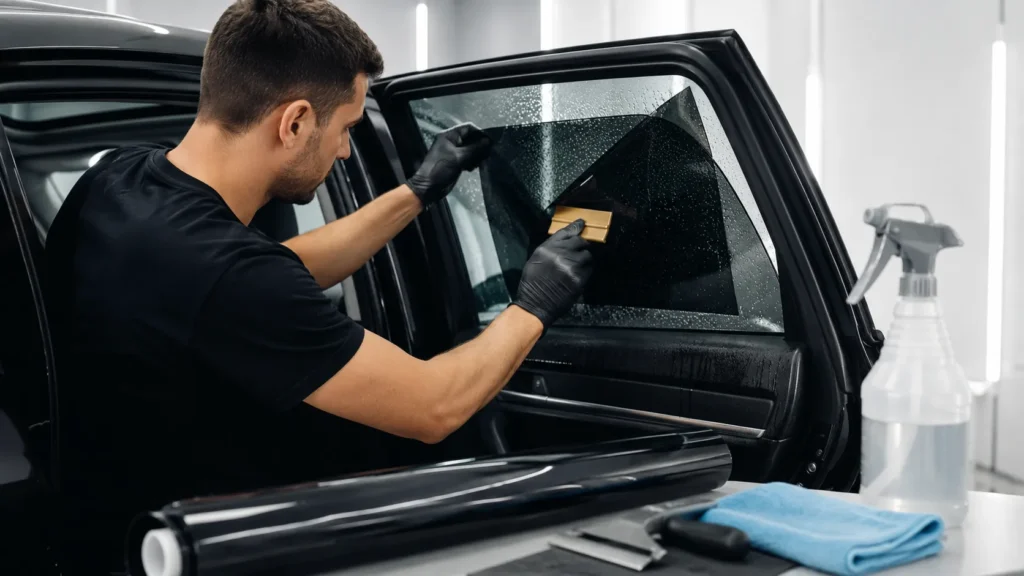
Automotive window film is usually installed on the inside of the glass. This helps protect the film from weather, road debris, scraping, car washes, and exterior damage.
Placement matters because inside installation protects the film and helps it last longer.
How to Maintain UV-Blocking Tint
Proper care helps window tint stay clear and effective.
- Wait until the film cures before cleaning.
- Use ammonia-free cleaner.
- Clean with a soft microfibre cloth.
- Avoid paper towels and rough rags.
- Do not scrape tinted film.
- Be careful near edges.
- Avoid harsh chemicals.
- Do not use abrasive pads.
- Follow installer aftercare instructions.
- Keep warranty documents and film details.
For full aftercare instructions, read this how to clean tinted car windows.
Where to Get UV-Blocking Window Tint
Choose a tint shop that explains film performance, not just shade. A good installer should help you compare UV rejection, VLT, heat rejection, warranty, legal compliance, and aftercare.
Ask these questions before booking:
- Does this film block UVA and UVB rays?
- What percentage of UV does it block?
- Is this tint legal in my province?
- Is there a clear UV film option?
- Is ceramic tint better for my needs?
- Does the film reduce heat too?
- Will the tint affect night visibility?
- Will it interfere with vehicle electronics?
- How long does the tint need to cure?
- What cleaner is safe after installation?
- Does the film include a warranty?
- Can I see the film specification sheet?
For service-selection guidance, read this where to get my car windows tinted.
Pros and Cons of UV-Blocking Car Tint
Pros
UV-blocking tint can reduce UVA and UVB exposure, help protect vehicle interiors, reduce glare, improve passenger comfort, and support long-term upholstery protection. Premium films can offer strong UV protection without requiring very dark windows.
Cons
High-quality film costs more than basic tint. Some darker films may not be legal on front windows. Poor installation can lead to bubbles or peeling. Tint also does not remove the need for other sun protection during long or intense exposure.
Common Misconceptions About UV and Car Tint
“All tinted windows block UV rays.”
Not always. Some tint mainly reduces visible light and glare. Always check the UV rejection rating.
“Darker tint always blocks more UV.”
False. Film technology matters more than darkness. A clear or light UV film may block more UV than a cheap dark film.
“Factory privacy glass is enough.”
Sometimes it helps, but factory privacy glass may not provide the same UV protection as premium aftermarket film.
“The windshield protects the whole car.”
The windshield may offer better UV protection than side glass, but passengers and drivers can still receive exposure through side windows.
“Tint replaces sunscreen.”
Tint can reduce UV exposure, but sunscreen and other sun protection may still be useful during long drives.
“UV protection and heat rejection are the same.”
They are different. UV protection blocks ultraviolet rays, while heat rejection reduces solar heat, especially infrared heat.
Practical Examples
Example 1: Daily Commuter
A driver spends one hour each way commuting with sunlight hitting the driver-side window. UV-blocking film on legal side windows may help reduce regular sun exposure.
Example 2: Family SUV
A family vehicle has children in the back seats. UV-blocking film can help reduce sun exposure and glare for rear passengers while also protecting seat fabric and interior trim.
Example 3: Vehicle With Factory Privacy Glass
An SUV already has dark rear factory glass. The owner may still ask whether the glass has strong UV rejection or whether clear film can improve protection.
Example 4: Driver Wants Protection Without Dark Tint
A driver wants UV protection but does not want a dark appearance. A clear or light ceramic film may be a better choice than a darker privacy-style tint.
Example 5: Canadian Winter Glare
A driver notices glare from snow reflection during winter. Tint may help with glare and comfort, but visibility and legal compliance remain important.
Conclusion
Do tinted car windows block UV rays? Yes, they can, but the level of protection depends on the quality and type of tint film. The best choice is not always the darkest film. A premium ceramic, carbon, or clear UV-blocking window car tint may offer strong UV protection while keeping visibility safe and legal.
For Canadian drivers, the right tint can help reduce sun exposure, protect interiors, improve comfort, and reduce glare. Still, tint should be chosen carefully. Check provincial rules, review film specifications, choose professional installation, and continue using smart sun protection habits during long drives.
FAQs About Tinted Car Windows and UV Rays
Do tinted car windows block UV rays?
Yes, quality tinted car windows can block UV rays. The amount of protection depends on the film type, glass type, and UV rejection rating.
Does car window tint block UVA rays?
Many high-quality films are designed to reduce UVA rays, but not every tint blocks UVA equally. Check the film’s UVA rejection rating.
Does car window tint block UVB rays?
Yes, many glass and tint products block UVB rays well, but film specifications should still be checked for complete UV protection.
Does factory tint block UV rays?
Factory tint may block some UV rays, but it is often designed mainly for privacy and glare reduction. Premium aftermarket UV film may provide stronger tested protection.
Does darker tint block more UV?
Not always. A light or clear film with high UV rejection can block more UV than a cheap dark film.
Is ceramic tint best for UV protection?
Ceramic tint is often one of the best options because it can provide strong UV protection, heat rejection, and visibility without needing to be extremely dark.
Can clear window film block UV rays?
Yes, clear UV-blocking film can provide UV protection without making the windows look dark, depending on the product.
Do I still need sunscreen in the car?
Sunscreen may still be useful, especially during long drives or high UV conditions. Tint helps reduce exposure but should not be your only sun protection habit.
Can UV tint protect car interiors?
Yes, UV-blocking tint can help reduce dashboard fading, leather cracking, fabric fading, and plastic discolouration caused by sun exposure.
Is UV-blocking tint legal in Canada?
It depends on your province, the window location, and the visible light transmission. Check local tint rules before installing film.
Does UV tint also keep the car cooler?
Some UV-blocking films also reduce heat, especially ceramic films, but UV protection and heat rejection are different performance features.
How do I know if my tint blocks UV rays?
Ask for the film specification sheet. Look for UVA rejection, UVB rejection, total UV rejection, VLT, infrared rejection, and warranty details.