


Does car window tint go on inside or outside? Car window tint is normally installed on the inside of the vehicle glass, not the outside. During professional car window tinting, the film may be measured, cut, or heat-shaped on the outside of the window first, but the final adhesive application usually goes on the interior side of the glass. This protects the film from rain, snow, road salt, wipers, rocks, washing, and daily weather exposure.
For Canadian drivers, this matters because correct placement affects tint durability, visibility, cleaning, legal compliance, and long-term performance.
Quick Answer: Does Car Window Tint Go on Inside or Outside?
Car window tint goes on the inside of the car window. The film is applied to the interior glass surface so it stays protected from exterior weather, road debris, car washes, snow, ice, and scratches. Installers may use the outside of the glass for shaping the film, but the finished tint is placed inside.
| Question | Answer |
|---|---|
| Does car window tint go inside or outside? | Inside |
| Is the outside ever used? | Yes, for measuring, cutting, or heat-shrinking |
| Is exterior tint common on cars? | No, not for normal daily driving |
| Why is tint installed inside? | To protect the film and help it last longer |
| Can outside tint peel faster? | Yes, because it faces weather, washing, and road debris |
Why Car Window Tint Is Installed on the Inside
Car window tint is installed inside because the interior side of the glass gives the film a safer, cleaner, and more stable surface. The film can bond to the glass without constant exposure to rain, snow, dirt, road salt, windshield wipers, rocks, bugs, and car wash brushes.
Most automotive tint film has an adhesive side that bonds to glass and a protective surface that faces the cabin. This setup works best when the film sits inside the vehicle. If the film were placed outside, the weather and road environment would wear it down much faster.
Inside installation helps with:
- Longer film life
- Better edge protection
- Cleaner appearance
- Fewer scratches
- Lower risk of peeling
- Better protection from road debris
- Easier maintenance
- More stable adhesive performance
Why Installers Sometimes Use the Outside of the Window
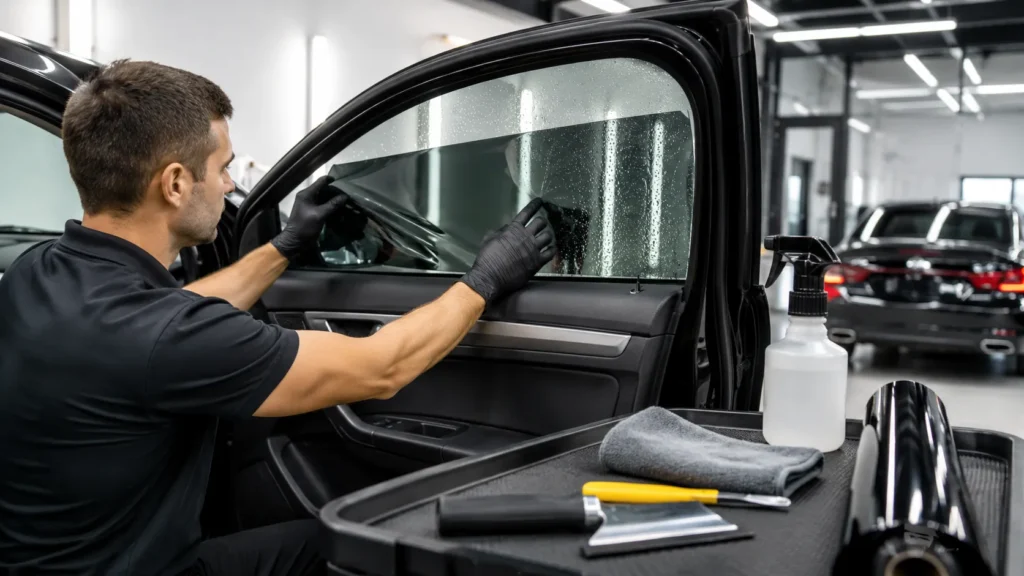
This is where many people get confused. During car window tinting, an installer may place the film on the outside of the window temporarily. This does not mean the tint will stay outside.
The outside glass may be used to:
- Measure the window shape
- Cut the film pattern
- Heat-shrink the film on curved glass
- Check alignment
- Shape the tint before installation
- Prepare the film before transferring it inside
After shaping and trimming, the installer removes the liner and applies the film to the inside of the glass. This is common on curved rear windows, side windows, and complex vehicle glass.
So, if you see an installer working on the outside of the glass, that may only be part of the preparation process.
Inside vs Outside Car Window Tint: Simple Comparison
| Placement | Common for Cars? | Main Benefit | Main Problem |
| Inside glass | Yes | Protected from weather and road damage | Needs careful cleaning after installation |
| Outside glass | No, except temporary fitting or special cases | Easier to see shape during prep | Exposed to scratches, peeling, fading, and weather |
| Factory privacy glass | Built into glass | Permanent dark appearance | May not offer the same heat rejection as premium film |
| Exterior architectural film | Used on some buildings, not regular car tint | Special commercial use | Not ideal for daily automotive glass |
What Happens If Tint Is Installed on the Outside?
Exterior tint on a daily-driven vehicle is usually not recommended. The outside of a car window faces harsh conditions every day, especially in Canada.
Outside tint may be damaged by:
- Rain
- Snow
- Freezing temperatures
- Road salt
- Ice scraping
- Snow brushes
- Car wash brushes
- Pressure washers
- Windshield wipers
- Bugs and road grime
- Dust and sand
- Rocks and debris
- UV exposure
These conditions can cause peeling, scratches, cloudy patches, bubbling, fading, and adhesive failure. That is why professional automotive tint is normally installed inside the vehicle.
Does Tint Placement Affect Heat Reduction?
The placement itself is not the only thing that affects heat reduction. The film type, quality, and technology matter more. However, inside placement protects the film so it can perform properly for longer.
Quality tint can help reduce glare, UV exposure, and heat buildup inside the cabin. Ceramic and carbon films often perform better for heat rejection than basic dyed film.
For a deeper explanation of cooling benefits, read this does tinted windows keep car cooler.
Does Tint Placement Affect Privacy?
No major difference in privacy comes from inside placement alone. Privacy depends more on the shade, visible light transmission, film type, glass colour, and lighting conditions inside and outside the vehicle.
A properly installed interior tint can still provide privacy because the film sits directly against the glass and changes how much light passes through. You do not need exterior tint for privacy on a normal car.
Does Tint Placement Affect Canadian Tint Laws?
Tint placement usually does not remove the need to follow local rules. Canadian tint laws focus on visibility, window location, and light transmission. In other words, the important question is not only where the film sits, but how much light passes through the glass and film together.
Tint rules vary by province. Windshields and front side windows are usually more restricted than rear windows. Before choosing a car window tint, check the rules in your province and ask the installer about legal options.
Citation placeholder: Add an official provincial source here, such as SAAQ for Quebec or provincial motor vehicle regulations for your target location.
What Side Does the Adhesive Go On?
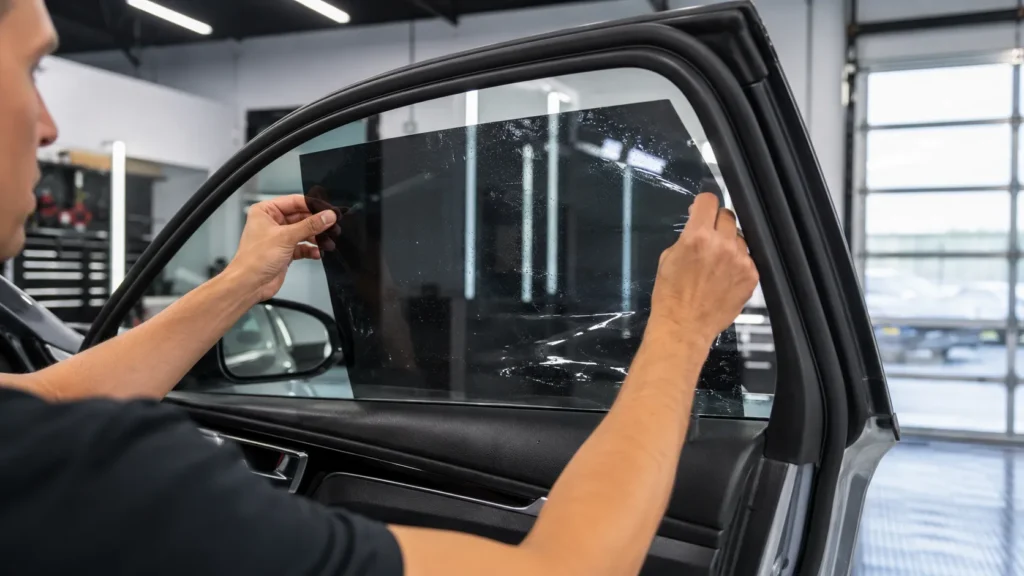
The adhesive side of automotive tint film goes against the glass. During installation, the protective liner is removed, a slip solution is used, and the adhesive side is placed on the inside surface of the window.
The installer then uses a squeegee to remove water, air pockets, and excess solution. After that, the film needs time to cure. During curing, the remaining moisture dries out and the film bonds more firmly to the glass.
Basic Car Window Tinting Process
Professional car window tinting usually follows a careful process.
1. Glass Cleaning
The installer cleans the glass thoroughly to remove dust, grease, old residue, and contamination. Clean glass helps prevent bubbles and dirt under the film.
2. Measuring and Cutting
The film is measured and cut to match the window shape. Some installers use computer-cut patterns, while others hand-cut the film.
3. Heat-Shaping the Film
On curved windows, the film may be placed on the outside of the glass and heat-shaped. This helps the film match the curve before it is installed inside.
4. Applying Slip Solution
A mild installation solution is sprayed on the inside glass. This lets the installer position the film correctly before it bonds.
5. Applying the Tint Inside
The liner is removed, and the adhesive side of the film is placed onto the interior glass surface.
6. Squeegeeing and Finishing
The installer removes water and air bubbles, trims edges, and checks the fit. The tint then needs time to cure.
For more installation detail, read this where to get my car windows tinted.
Why Inside Tint Lasts Longer
Inside tint lasts longer because it is protected from the most aggressive exterior conditions. The cabin side of the glass is still exposed to sunlight and cleaning, but it does not face the same punishment as the outside of the vehicle.
Inside placement reduces contact with:
- Road grit
- Wind-driven dust
- Ice scrapers
- Snow brushes
- Exterior washing tools
- Strong pressure washer streams
- Harsh road chemicals
- Direct physical abrasion
This helps the film stay smoother, clearer, and better bonded over time.
Can You Install Tint Yourself Inside the Car?
DIY tint installation is possible, but it is not easy. The film must be cut accurately, handled carefully, and applied without dust, creases, or trapped air. Curved rear glass can be especially difficult.
DIY mistakes may include:
- Dust under the film
- Creases
- Bubbles
- Uneven edges
- Scratched film
- Poor adhesion
- Lifting corners
- Damaged defroster lines
- Wrong tint shade
- Legal visibility issues
A small side window may be manageable for a careful beginner, but full-vehicle tinting usually requires experience, proper tools, and a clean workspace.
Pros and Cons of Interior Tint Installation
Pros
Interior installation protects the tint from weather, improves durability, helps maintain a cleaner finish, reduces peeling risk, and keeps the film away from road debris and exterior washing damage.
Cons
The inside glass still needs proper care. Harsh cleaners, rough cloths, stickers, suction mounts, pets, cargo, or scraping tools can damage the film. Fresh tint also needs curing time before cleaning or rolling windows down.
Common Misconceptions About Car Window Tint Placement
“Tint goes outside because installers work on the outside.”
Not exactly. Installers may shape or cut film on the outside, but the final installation usually goes on the inside.
“Outside tint gives better privacy.”
Not usually. Privacy depends on film shade, glass type, and light transmission, not whether the tint is inside or outside.
“Inside tint will peel quickly.”
Properly installed inside tint should not peel quickly. Peeling usually happens because of poor preparation, low-quality film, contamination, improper curing, or rough cleaning.
“Factory privacy glass is the same as tint film.”
Factory privacy glass is built into the glass. Aftermarket tint film is applied to the glass surface. They may look similar, but their heat rejection and UV performance can differ.
“Tinted windows do not need special care.”
Tinted windows need gentle care, especially on the inside surface where the film sits.
Maintenance Tips After Tint Installation
After tint is installed, proper care helps the film last longer.
- Do not roll windows down until the installer says it is safe.
- Do not clean the inside glass too soon.
- Use ammonia-free cleaner.
- Use a soft microfibre cloth.
- Avoid paper towels and rough rags.
- Do not scrape the film.
- Be gentle around edges.
- Avoid stickers or suction mounts on tinted film.
- Do not pick at bubbles during curing.
- Keep pets and cargo from scratching the film.
- Follow the installer’s aftercare instructions.
For detailed cleaning steps, read this how to clean tinted car windows.
How to Clean Inside Window Tint
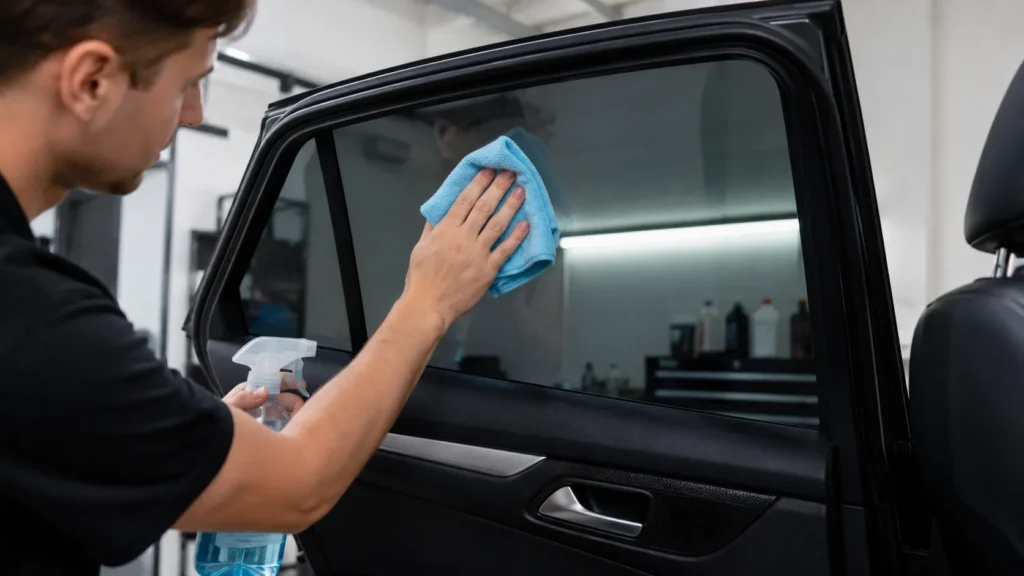
Because car window tint goes on the inside, you should clean the interior glass carefully. Spray an ammonia-free cleaner onto a microfibre cloth, not directly onto the film. Wipe gently, dry with a second towel, and avoid aggressive scrubbing near the edges.
Do not use:
- Ammonia cleaners
- Razor blades
- Scrapers
- Abrasive pads
- Rough towels
- Strong solvents
- Harsh alcohol-based cleaners
If the tint is bubbling, peeling, or turning purple, cleaning will not fix the film. The tint may need professional inspection or replacement.
Practical Examples
Example 1: Side Window Tint
A technician may place film on the outside of the side window to size it, then move it inside for final installation. Once cured, the film stays protected from rain and road debris.
Example 2: Rear Window Tint
Rear glass is often curved, so the installer may heat-shrink the film on the outside first. Final installation still happens inside, where the tint is protected from weather and the rear wiper.
Example 3: Canadian Winter Driving
In winter, exterior glass may face snow brushes, ice scraping, salt spray, and freezing rain. If tint were installed outside, it would be exposed to constant abrasion. Interior placement helps protect it.
Example 4: Car Wash Use
A vehicle with properly installed interior tint can go through normal exterior washing after the film has cured. The tint sits inside, so outside washing is less likely to harm it.
Example 5: Poor DIY Exterior Tint
A driver applies film outside because it seems easier. After rain, washing, and sun exposure, the edges begin to lift. This is why exterior tint is not recommended for normal automotive use.
Conclusion
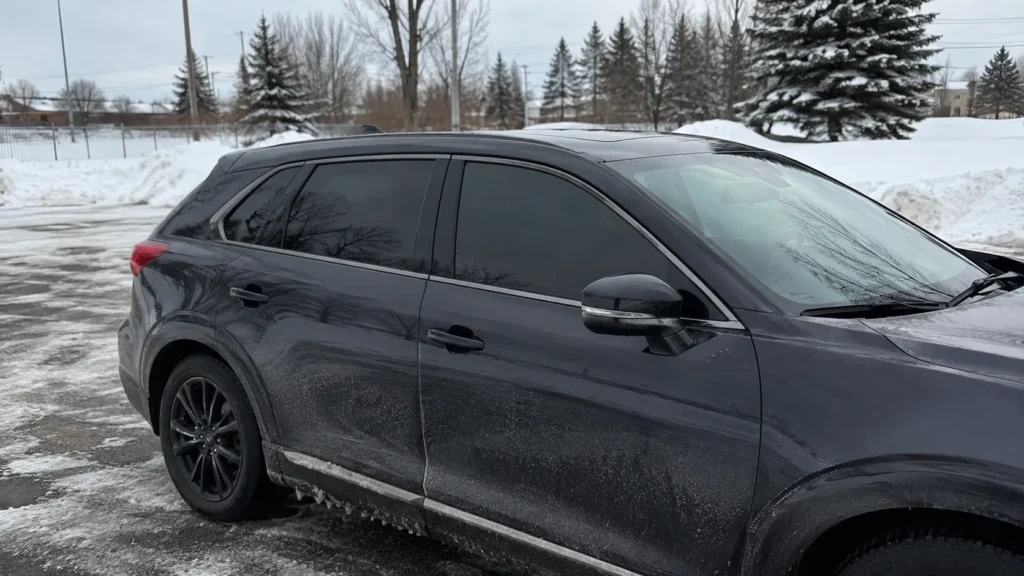
Does car window tint go on inside or outside? In almost every normal automotive installation, car window tint goes on the inside of the glass. The outside may be used during measuring, cutting, and heat-shaping, but the final film is applied to the interior surface.
Inside placement protects the tint from Canadian weather, road salt, rain, snow, car washes, wipers, and scratches. It also helps the film stay clear, smooth, and longer lasting. For the best result, choose the right film, follow provincial tint rules, use a skilled installer, and care for the tinted interior glass properly after installation.
FAQs About Car Window Tint Placement
Does car window tint go on inside or outside?
Car window tint usually goes on the inside of the glass. The outside may be used temporarily for shaping or cutting, but the finished film is installed inside.
Why does car window tint go on the inside?
Car window tint goes inside because it protects the film from rain, snow, road salt, wipers, car washes, rocks, and scratches.
Can window tint be installed on the outside?
Technically, film can be placed outside, but exterior tint is not recommended for normal automotive use because it can peel, scratch, fade, and fail faster.
Why do installers put tint on the outside first?
Installers may place the film on the outside to measure, cut, and heat-shrink it to the window shape before transferring it to the inside.
Which side of tint film sticks to the glass?
The adhesive side sticks to the glass. During installation, the liner is removed and the adhesive side is placed against the interior glass surface.
Does inside tint protect from heat?
Yes, quality inside tint can reduce glare and solar heat entering through the glass. Heat rejection depends more on film type and quality than placement alone.
Does tint placement affect privacy?
Not much. Privacy depends mostly on film shade, visible light transmission, and lighting conditions, not whether the film sits inside or outside.
Is car window tint legal in Canada?
Car window tint can be legal in Canada, but rules vary by province. Front windows and windshields are usually more restricted than rear windows.
Can I wash my car after tint is installed?
Exterior washing is usually different from cleaning the inside tint. Follow the installer’s curing instructions before washing aggressively, rolling windows down, or cleaning the interior glass.
How should I clean car window tint?
Use ammonia-free cleaner and a soft microfibre cloth on the inside tinted surface. Avoid rough cloths, scrapers, razors, and harsh chemicals.
Can rear window tint go inside with defroster lines?
Yes, rear window tint is normally installed inside, over the glass surface with defroster lines. Professional care is important to avoid damage during installation or removal.
How long does inside car tint last?
The lifespan depends on film quality, installation, sun exposure, cleaning habits, and climate. Professional-grade film generally lasts longer than low-quality DIY film.