


Knowing how to clean tinted car windows matters because tint film is more delicate than regular glass. The safest method is simple: wait until new tint has cured, use an ammonia-free cleaner, wipe with a soft microfibre cloth, and avoid harsh chemicals or rough materials.
This guide explains what to use, what to avoid, how to clean tinted windows inside car, and whether you can wash your car after window tint without damaging the film.
Quick Answer: How to Clean Tinted Car Windows Safely
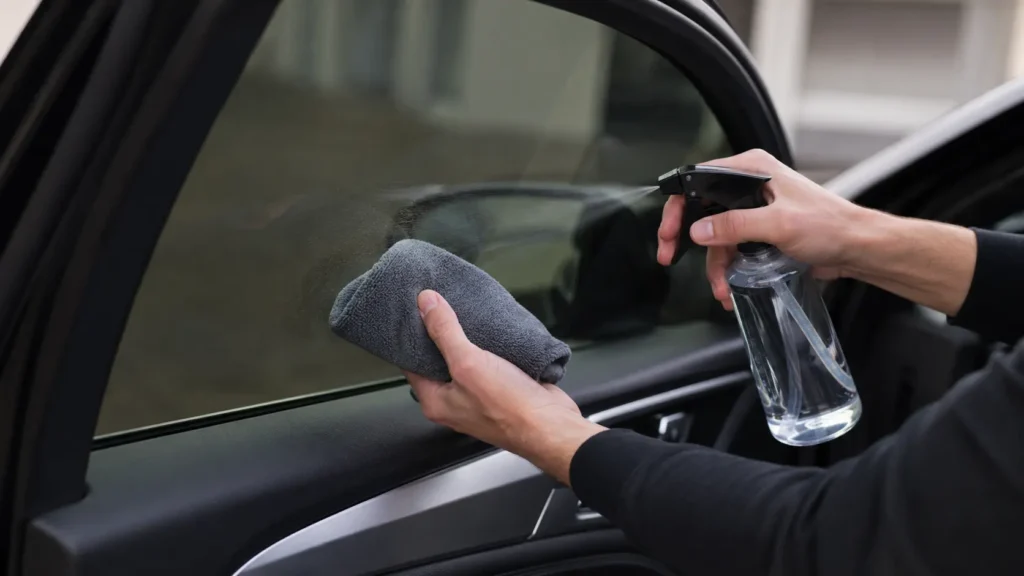
To clean tinted car windows safely, use an ammonia-free glass cleaner and a clean microfibre cloth. Spray the cleaner onto the cloth, not directly onto the tinted glass. Wipe gently from top to bottom, dry with a second microfibre towel, and avoid paper towels, ammonia, alcohol, razors, abrasive pads, and strong chemicals.
What to Use to Clean Tinted Car Windows
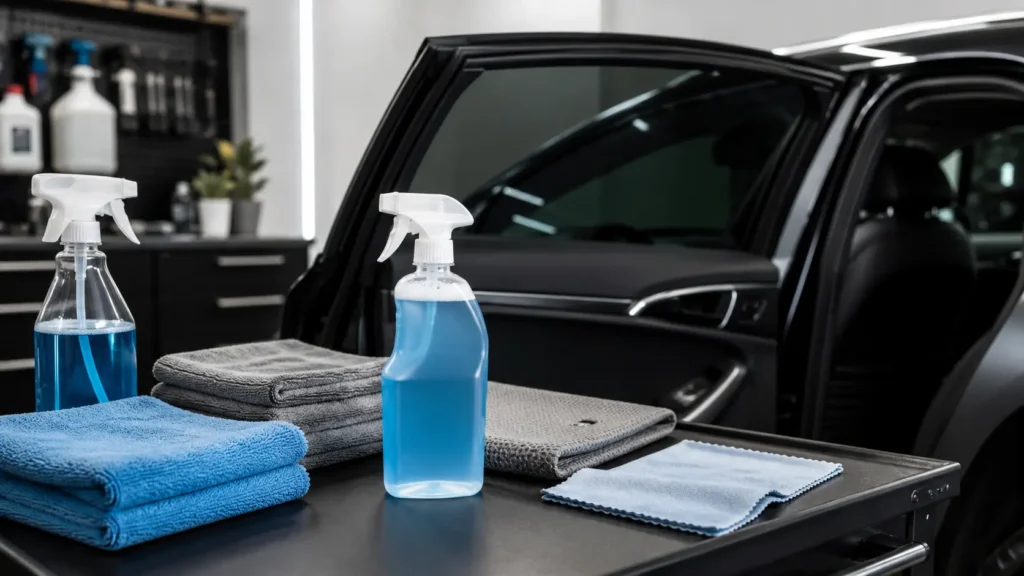
The best products for tinted car windows are gentle, ammonia-free, and non-abrasive. A tint-safe glass cleaner, soft microfibre cloth, and clean dry towel are usually enough for regular cleaning.
Good options include:
- Ammonia-free automotive glass cleaner
- Tint-safe glass cleaner
- Mild soap and water for light cleaning
- Distilled water for fewer mineral streaks
- Soft microfibre towels
- A clean spray bottle
Avoid using rough towels, household glass cleaners with ammonia, strong alcohol-based cleaners, scraping tools, or abrasive pads on the tinted side of the glass.
How to Clean Tinted Window Film Without Scratches
Tinted window film can scratch if you scrub it with rough material or wipe dirt across the surface too aggressively. Use light pressure and straight wiping motions. If the glass has fingerprints, dust, or light residue, clean it in two gentle passes instead of one hard scrub.
For safer wiping, spray cleaner onto the cloth first. This reduces overspray near the film edges and helps prevent cleaner from running under the tint.
Why Tinted Car Windows Need Special Care
Tinted windows are not the same as plain glass. Most automotive tint film is installed on the inside of the window. That film has layers, adhesive, and edges that can be affected by harsh cleaners, rough towels, scraping tools, or too much pressure.
The outside of the window is still normal exterior glass, so road grime, rain, salt, dust, and bugs can be washed away as part of a normal car wash. The inside surface needs more careful handling because that is where the tint film usually sits.
If you clean tinted windows the wrong way, you may notice:
- Streaks
- Scratches
- Cloudy patches
- Lifting edges
- Peeling corners
- Bubbles
- Discolouration
- Adhesive damage
Good cleaning habits help the tint look clear and last longer.
Tools You Need to Clean Tinted Car Windows
| Item | Why It Helps |
| Ammonia-free glass cleaner | Cleans safely without attacking tint adhesive |
| Microfibre cloth | Reduces scratching and lint |
| Second dry microfibre towel | Buffs away streaks |
| Mild soap and water | Good for light cleaning |
| Distilled water | Helps reduce mineral streaks |
| Spray bottle | Controls how much cleaner you use |
| Soft rubber squeegee | Useful for exterior glass, if used gently |
| Clean detailing towel | Helps dry edges and corners |
Avoid using paper towels, rough rags, abrasive pads, razor blades, strong degreasers, rubbing alcohol, or ammonia-based cleaners on the tinted side of the glass.
How to Clean Tinted Car Windows Step by Step
Step 1: Let New Tint Cure First
Do not clean newly tinted windows right away. Fresh tint needs time to dry and bond to the glass. During curing, you may see light haze or small moisture pockets. That does not always mean the tint is damaged.
Many installers recommend waiting several days before touching the inside glass, while some film manufacturers recommend a longer waiting period before cleaning the film. The safest approach is to follow the installer’s instructions for your specific film.
For more details about installation and curing time, read how long does it take to tint car windows.
Step 2: Park in the Shade
Clean tinted windows in the shade when possible. Direct sunlight can make cleaner dry too quickly, leaving streaks. In Canada, this matters during both summer heat and winter conditions when glass temperature can change quickly.
A cool, shaded area gives you more time to wipe and dry the glass properly.
Step 3: Use an Ammonia-Free Cleaner
Choose a cleaner labelled safe for tinted windows or ammonia-free. Ammonia can weaken some tint adhesives, cause discolouration, and reduce the life of the film.
Do not spray too much cleaner. Overspraying can push liquid into the edges of the film. A light mist is enough.
Step 4: Spray the Cloth, Not the Window
For the inside tinted surface, spray the cleaner onto a microfibre cloth first instead of spraying directly onto the glass. This gives you better control and reduces the chance of cleaner running into the film edges.
This is especially important near door seals, rear defroster lines, and window edges.
Step 5: Wipe Gently From Top to Bottom
Wipe the tinted glass with light pressure. Start at the top and move downward in smooth passes. Avoid circular scrubbing if the window is very dirty because trapped grit can scratch the film.
For stubborn fingerprints, breathe lightly on the area or apply a small amount of tint-safe cleaner to the cloth and wipe again.
Step 6: Dry With a Second Microfibre Cloth
Use a clean, dry microfibre towel to buff the glass. This removes leftover moisture and helps prevent streaks.
Do not let cleaner air-dry on tinted film. Drying by itself can leave marks, especially if your water has minerals.
Step 7: Clean the Edges Carefully
Tint edges are more delicate than the centre of the glass. Do not pick, scrape, or press hard along the edges. Wipe gently and avoid soaking them.
If the edge is already lifting, do not pull it. Ask a professional installer whether it can be repaired.
How to Clean Tinted Windows Inside Car
The inside tinted surface needs the most care. To clean tinted windows inside the car safely, use a soft microfibre cloth and ammonia-free cleaner. Spray the cloth lightly, wipe gently, and dry with a second towel.
Inside windows often collect:
- Fingerprints
- Dog nose marks
- Dust
- Vape or smoke residue
- Interior dressing overspray
- Condensation marks
- Child seat smudges
For greasy film or smoke residue, repeat gentle cleaning instead of using strong chemicals. Two light passes are safer than one aggressive scrub.
Can I Wash My Car After Window Tint?
Yes, you can usually wash the outside of your car after window tint because the film is installed on the inside of the glass. Exterior washing normally does not harm the tint.
However, do not clean the inside tinted glass too soon after installation. Fresh tint needs time to cure, and wiping the film early may affect the adhesive or edges. Follow your installer’s aftercare instructions before rolling windows down, cleaning the inside glass, or wiping the rear window.
If your tint was installed recently, ask your installer when it is safe to:
- Roll windows down
- Clean the inside glass
- Use glass cleaner
- Wipe the rear window
- Wash near window seals
For installation guidance, read how to install car window tint.
What Cleaners Are Safe for Tinted Windows?
Safe options usually include:
- Ammonia-free automotive glass cleaner
- Tint-safe glass cleaner
- Mild soap and water
- Distilled water with a tiny amount of gentle dish soap
- Clean water for light dust
- Film-safe interior glass cleaner
Always check the label before using a product on tinted windows. If it says ammonia, heavy solvent, abrasive, or strong degreaser, avoid it on the tinted side.
What Cleaners Should You Avoid?
Avoid these on tinted car windows:
- Ammonia-based glass cleaner
- Rubbing alcohol
- Strong solvent cleaners
- Abrasive cleaners
- Rough paper towels
- Scouring pads
- Razor blades
- Magic eraser-style pads
- Harsh degreasers
- Scrapers on the film side
These products may scratch the film, weaken adhesive, dull the finish, or cause peeling.
How to Remove Streaks and Residue From Tinted Windows
Streaks and light residue on tinted windows usually come from too much cleaner, dirty towels, direct sunlight, smoke film, fingerprints, or cleaner drying too quickly.
To remove residue safely:
- Park the vehicle in the shade.
- Use a clean microfibre cloth.
- Apply a small amount of ammonia-free cleaner to the cloth.
- Wipe in straight lines with light pressure.
- Dry immediately with a second clean towel.
- Repeat gently if needed.
If the residue is old adhesive from removed tint, do not scrape the tinted side. That is a different issue and may need professional tint removal support.
Cleaning Tinted Windows in Canadian Weather
Canadian weather can make tinted window care more important.
In Winter
Road salt, slush, and dirty snow can leave residue on exterior glass. Wash the outside glass regularly, but avoid scraping the inside tinted surface. If there is interior fog or condensation, use defrost and a soft cloth instead of aggressive wiping.
In Summer
Heat and sunlight can make a cleaner dry quickly. Clean in the shade to reduce streaks.
During Rainy or Humid Weather
Humidity can make glass look cloudy. Use a dry microfibre towel to buff the inside surface after cleaning.
Pros and Cons of Cleaning Tinted Windows Yourself
Pros
Cleaning tinted windows yourself is affordable, simple, and helps keep the glass clear. Regular care can prevent grime buildup and protect the appearance of the tint.
Cons
The risk comes from using the wrong cleaner, rough cloths, or too much pressure.
If the tint is peeling, bubbling, or turning purple, cleaning will not fix the problem. In that case, removal or replacement may be needed.
For damaged tint, read how to remove car window tint.
Common Misconceptions About Cleaning Tinted Windows
“Any glass cleaner is fine.”
Not true. Some glass cleaners contain ammonia or strong chemicals that can damage tint film.
“Paper towels are safe because they feel soft.”
Paper towels can be rough enough to leave fine scratches on tinted film. Microfibre is safer.
“You can clean a new tint the same day.”
Fresh tint needs time to cure. Cleaning too soon can disturb the adhesive or edges.
“Exterior washing damages the tint.”
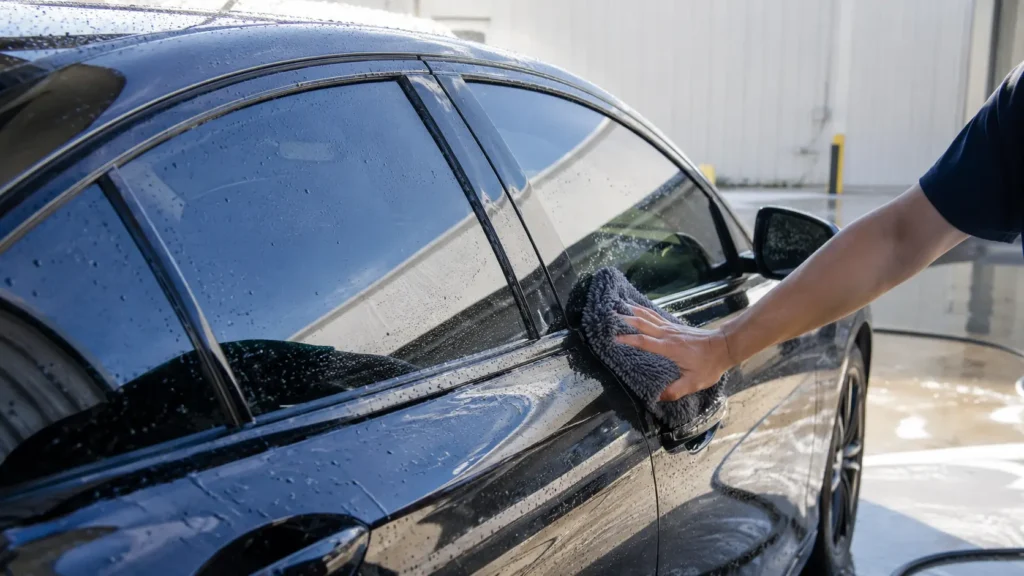
Normal exterior washing usually does not damage window tint because the film is installed on the inside of the glass. The inside tinted surface needs more careful handling, especially while new tint is curing.
“Streaks mean the tint is bad.”
Not always. Streaks often come from too much cleaner, dirty towels, sunlight, or residue.
Maintenance Tips for Long-Lasting Tint
- Use only ammonia-free cleaner.
- Keep a clean microfibre towel in the vehicle.
- Clean in the shade.
- Wipe gently.
- Dry the glass after cleaning.
- Avoid stickers or suction mounts on tint.
- Do not scrape the film.
- Keep pets from scratching the inside glass.
- Avoid pressing cargo against tinted windows.
- Check edges regularly.
- Follow installer aftercare instructions.
When Should You Ask a Professional?
Ask a professional if you see:
- Peeling edges
- Large bubbles
- Purple or faded tint
- Scratches in the film
- Adhesive residue
- Rear defroster damage
- Dirt trapped under the tint
- Tint that looks cloudy after curing
A professional can tell whether the tint can be cleaned, repaired, removed, or replaced.
For help choosing a tinting service, read where to get my car windows tinted.
Practical Examples
Example 1: Freshly Tinted Windows
A driver gets a new tint installed and notices light haze after two days. Instead of cleaning it, they wait for the film to cure and follow the installer’s aftercare advice. The haze fades as the film dries.
Example 2: Fingerprints on Interior Tint
A passenger leaves fingerprints on the side window. The driver sprays ammonia-free cleaner onto a microfibre cloth, wipes gently, and dries with a second towel.
Example 3: Winter Salt on Exterior Glass
After driving through slush, the outside windows are covered in salt. The driver washes the exterior normally but avoids scraping or harsh cleaning on the inside tinted surface.
Example 4: Streaks After Cleaning
A driver sees streaks after using too much cleaner. They switch to a clean microfibre cloth, use less product, and buff the glass dry.
Example 5: Old Bubbling Tint
A driver tries to clean the bubbling tint, but the film keeps looking cloudy. The issue is not dirt; the film is failing. Removal or replacement is the better option.
Buying and Service Considerations
When buying cleaners or booking tint care, ask:
- Is the cleaner ammonia-free?
- Is it labelled safe for tinted windows?
- Does it leave residue?
- Is the towel soft enough for tint film?
- Can the product be used on interior automotive film?
- How soon can I clean after tint installation?
- What cleaner does the installer recommend?
- Is the tint under warranty?
- What should I avoid during curing?
- Can damaged tint be repaired or does it need removal?
Conclusion
Learning how to clean tinted car windows helps protect the film, reduce streaks, improve visibility, and keep your vehicle looking clean. The safest approach is to use ammonia-free cleaner, soft microfibre towels, gentle wiping, and proper timing after installation.
For Canadian drivers, exterior glass may need regular washing because of salt, snow, rain, and road grime. The inside tinted film needs more careful handling. With the right products and simple aftercare, tinted windows can stay clear, smooth, and longer lasting.
FAQs About How to Clean Tinted Car Windows
What is the best way to clean tinted car windows?
The best way to clean tinted car windows is to use an ammonia-free cleaner and a soft microfibre cloth. Spray the cleaner onto the cloth, wipe gently, and dry with a second clean towel.
What should I use to clean tinted car windows?
Use ammonia-free automotive glass cleaner, mild soap and water, distilled water, and clean microfibre towels. Avoid ammonia, harsh chemicals, razors, rough cloths, and paper towels.
Can I wash my car after window tint?
Yes, you can usually wash the outside of the car after window tint. However, wait before cleaning the inside tinted glass until the film has cured.
How do I clean tinted windows inside car?
Spray a tint-safe cleaner onto a microfibre cloth, then wipe the inside glass gently from top to bottom. Dry with a second towel to reduce streaks.
How do I remove residue from tinted windows?
Use a small amount of ammonia-free cleaner on a clean microfibre cloth and wipe gently. If the residue is old adhesive from removed tint, do not scrape the film side.
Can I wipe on window tint?
Yes, you can wipe window tint gently with a clean microfibre cloth. Avoid hard pressure, dry wiping on dirty glass, and rough materials that can scratch the film.
Can I use paper towels on tinted windows?
Paper towels are not ideal because they can leave lint and may create fine scratches. Microfibre towels are safer for tinted film.
Can I use Windex on tinted car windows?
Only use Windex if it is ammonia-free and labelled safe for tinted windows. Traditional ammonia-based cleaners should be avoided on tint film.