


Adhesive residue on tinted windows is frustrating, but the fix is usually simple when you use the right method. The biggest mistake people make is treating tinted glass like bare glass. Tint film scratches easily, reacts badly to harsh chemicals, and can lift at the edges if you scrub too aggressively.
This guide explains how to remove adhesive from tinted windows safely, what products to use, what to avoid, and how to clean the window afterward without damaging the tint.
Whether you are dealing with sticker residue, tape adhesive, glue haze, or leftover residue from decals, this process will help you remove it cleanly.
Quick Answer: How Do You Remove Adhesive From Tinted Windows?
To remove adhesive from tinted windows safely:
- Warm the adhesive with a hair dryer or low heat.
- Spray the area with a tint-safe adhesive remover or warm soapy water.
- Let it sit for 1 to 3 minutes.
- Gently lift and wipe the residue with a microfiber cloth or soft plastic card.
- Repeat as needed.
- Finish with an ammonia-free glass cleaner.
Avoid razor blades, abrasive scrubbers, and ammonia-based cleaners. These can scratch, discolor, or loosen the tint film.
Why Tinted Windows Need a Different Cleaning Method
Tinted windows usually have a thin film applied to the interior side of the glass. That film can be:
- Dyed film
- Metalized film
- Carbon tint
- Ceramic tint
- Factory privacy glass with or without additional film
Adhesive on tinted windows is more delicate to remove because the tint layer can:
- Scratch under pressure
- Bubble from heat or chemical exposure
- Peel along edges
- Haze if you use the wrong solvent
- Wear down over time from repeated aggressive cleaning
That is why the safest approach always starts with low heat, light pressure, and tint-safe cleaners.
What Causes Adhesive Residue on Tinted Windows?
Adhesive residue on tinted windows commonly comes from:
- Stickers
- Parking permits
- Registration decals
- Tape
- Suction-mount accessories with adhesive backing
- Old tint installation residue
- Leftover glue from labels or shipping film
- Decorative decals
The exact removal method depends on how stubborn the residue is, but the safest workflow stays the same: soften, loosen, wipe, and clean.
What You Need Before You Start
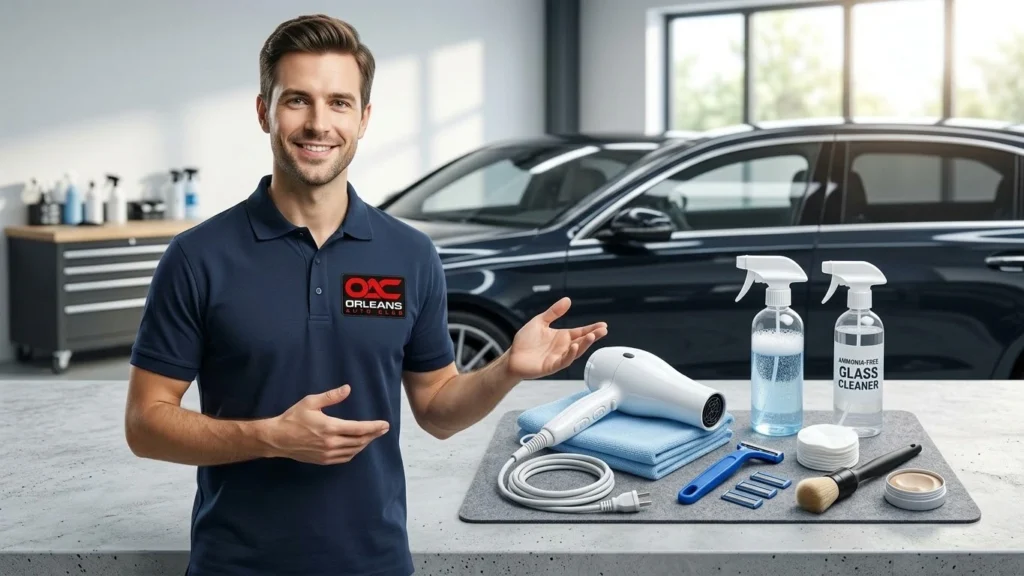
Use these tools and materials:
- Microfiber cloths
- Warm water
- Mild dish soap
- Spray bottle
- Hair dryer or steamer on low setting
- Plastic scraper, old gift card, or soft squeegee
- Cotton pads or soft cloth applicators
- Ammonia-free glass cleaner
- Tint-safe adhesive remover or citrus-based residue remover
- Isopropyl alcohol in small amounts, if needed
Optional:
- Nitrile gloves
- Distilled water for a streak-free finish
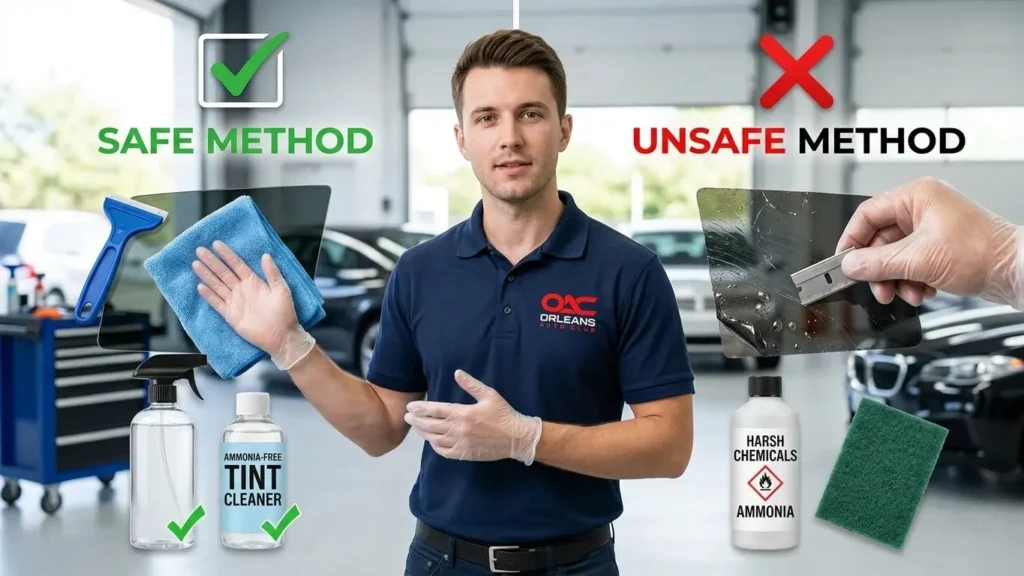
Do not use:
- Razor blades
- Steel wool
- Magic erasers
- Harsh scouring pads
- Ammonia-based cleaners
- Acetone
- Lacquer thinner
- Strong undiluted solvents unless the tint manufacturer specifically approves them
The Safest Method: Step-by-Step
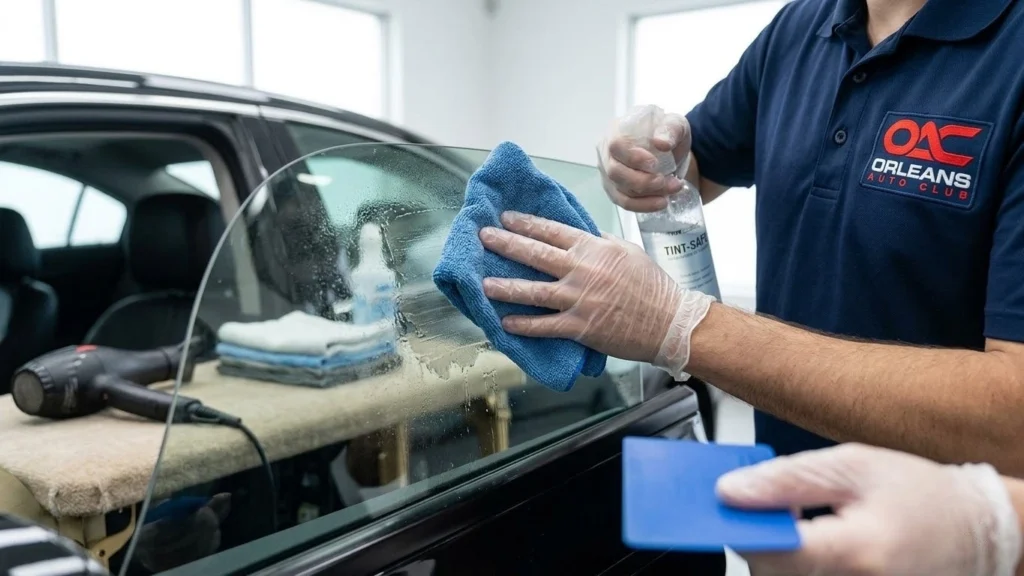
1. Test a Small Area First
Before you apply any cleaner or solvent, test it in a small, low-visibility corner.
This matters because not all tint films react the same way. A product that works on one vehicle or home window can damage another.
Look for signs of trouble:
- Discoloration
- Smearing
- Softening of the film
- Edge lifting
- Cloudiness
If any of those appear, stop and switch to the gentlest method: warm water plus dish soap.
2. Warm the Adhesive Gently
Use a hair dryer on low or medium heat and hold it several inches from the glass.
Move it constantly over the adhesive for 20 to 40 seconds. The goal is to soften the glue, not heat-soak the tint.
Why this works:
- Warm adhesive releases more easily
- You need less scraping and rubbing
- You reduce the risk of scratching the tint
Avoid high heat. Too much heat can warp film, weaken edges, or create bubbles.
3. Apply a Tint-Safe Solution
Spray or dab one of these onto the adhesive:
Best first choice
Warm water mixed with a few drops of dish soap
Best for stubborn residue
A tint-safe adhesive remover or citrus-based remover
For light glue haze
A small amount of isopropyl alcohol on a microfiber cloth
Let the solution sit for 1 to 3 minutes so it can break down the adhesive.
Do not soak the edges of the tint heavily. Excess liquid can seep under the film.
4. Lift the Adhesive Gently
Use a microfiber cloth first. Rub with light, controlled pressure in one direction.
If residue remains, use a plastic card or soft scraper at a shallow angle. Do not dig into the tint.
Best technique:
- Work from the outer edge inward
- Use short strokes
- Reapply solution when resistance increases
- Stop if the tint starts to drag, wrinkle, or lift
This step removes most sticker and tape adhesive without damaging the film.
5. Repeat Instead of Scrubbing Harder
Stubborn residue often needs multiple passes.
That is normal.
The safest approach is:
- Reheat lightly
- Reapply solution
- Wipe again
Do not switch to aggressive scraping too early. Repetition is safer than force.
6. Clean and Finish the Window
Once the residue is gone, clean the area with an ammonia-free glass cleaner and a fresh microfiber cloth.
This removes:
- Oily residue
- Cleaner streaks
- Glue haze
- Fingerprints
Buff gently until the glass looks even and clear.
Best Adhesive Removers for Tinted Windows
Not every adhesive remover is safe for tint. Choose products that are specifically labeled as safe for automotive tint or window film, or start with the gentlest home-safe method first.
Safest options
- Warm soapy water
- Ammonia-free glass cleaner
- Citrus-based adhesive remover tested on a hidden spot
- Isopropyl alcohol used sparingly
Use caution with
- Commercial adhesive removers with strong solvents
- Goo-dissolving products not labeled for tint
- Degreasers
- Multi-surface cleaners with unknown ingredients
Avoid completely
- Ammonia
- Acetone
- Paint thinner
- Razor scraping on film
- Strong alkaline cleaners
If the tint manufacturer provides care instructions, follow those over general advice.
How to Remove Sticker Residue From Tinted Windows
Sticker residue is one of the most common issues on tinted glass.
The safest process is:
- Heat the sticker area with a hair dryer.
- Peel off as much of the sticker as possible by hand.
- Apply warm soapy water or a tint-safe remover.
- Let it dwell for a minute or two.
- Wipe with microfiber.
- Use a plastic card for any remaining spots.
For thick, old sticker glue, repeat the cycle instead of adding force.
How to Remove Tape Adhesive From Tinted Windows
Tape residue often leaves a smeary layer rather than a solid patch of glue.
Use this method:
- Warm the residue slightly
- Dab on a small amount of tint-safe remover
- Let it soften
- Wipe with microfiber using straight motions
- Finish with ammonia-free cleaner
Do not scrub in tight circles. Circular scrubbing can create visible haze on some tint films.
How to Remove Old, Hardened Adhesive
Old adhesive can become brittle, dry, and stubborn. It usually responds best to time plus repeated softening.
Use this process:
- Apply low heat
- Use a longer dwell time with warm soapy water or tint-safe remover
- Wipe gently
- Repeat several times
For very old adhesive, place a damp microfiber cloth over the area for a few minutes before wiping. This helps rehydrate brittle residue without flooding the film.
Can You Use Rubbing Alcohol on Tinted Windows?
Yes, in small amounts, rubbing alcohol can help remove light adhesive residue from tinted windows. But use it carefully.
Best practice:
- Apply it to the cloth, not directly to the window
- Test first
- Use light pressure
- Follow with an ammonia-free cleaner
Rubbing alcohol can work well for thin glue films, but it is not always the best first choice for heavy adhesive buildup.
Can You Use Goo Remover on Tinted Windows?
Sometimes, but only with caution.
Some adhesive removers work well on bare glass but can damage certain tint films. The safest rule is:
- Use only products labeled safe for tinted windows or window film
- Always spot test first
- Keep the product away from film edges
- Do not let it sit longer than necessary
If you are unsure, start with warm soapy water. It is slower, but far safer.
Can You Scrape Adhesive Off Tinted Windows?
You can scrape lightly with a soft plastic tool, but you should not use a razor blade on aftermarket tint film.
A razor may be acceptable on untinted exterior glass in some cases, but not on the tinted film itself. On tinted windows, it can:
- Scratch the film
- Create permanent lines
- Catch the edge and peel it
- Damage rear defroster areas if used carelessly
Use a plastic card, soft squeegee, or microfiber cloth instead.
Special Care for Rear Tinted Windows With Defroster Lines
Rear windows need extra caution because defroster lines can be damaged by scraping and harsh pressure.
When removing adhesive from a tinted rear window:
- Wipe in the direction of the defroster lines
- Avoid scraping across them
- Use minimal pressure
- Use more dwell time and less friction
- Never use a razor
Damaged defroster lines can stop working, and repairs are not always simple.
How to Remove Adhesive From House Windows With Tint Film
The same principles apply to residential tinted windows:
- Use low heat
- Start with warm soapy water
- Choose ammonia-free cleaners
- Avoid blades on the film surface
- Test all removers before full use
Because some home window films are larger and older than automotive tint, edge lifting can be a bigger concern. Keep liquids controlled and avoid saturating the corners.
Common Mistakes That Damage Tinted Windows
Avoid these mistakes:
Using a razor blade
This is the fastest way to scratch or lift film.
Spraying harsh cleaner directly onto the tint
Too much liquid can seep into edges and weaken adhesion.
Using too much heat
Excess heat can distort the film or create bubbles.
Scrubbing aggressively
Force creates scratches, haze, and edge damage.
Using ammonia-based glass cleaner
Ammonia can degrade certain tint films and shorten their lifespan.
Ignoring manufacturer instructions
Some films have specific care requirements. Those instructions should always take priority.
How Long Does It Take to Remove Adhesive From Tinted Windows?
Most light adhesive residue comes off in 5 to 15 minutes.
Heavier or older residue may take 20 to 30 minutes because you need repeated cycles of:
- Warming
- Softening
- Wiping
- Finishing
Trying to rush the job usually causes damage. Safe removal is more about control than speed.
When to Call a Professional
Get professional help if:
- The tint is already bubbling or peeling
- The adhesive covers a large area
- The residue sits close to damaged film edges
- You are dealing with expensive ceramic tint
- The adhesive is actually old tint glue from failing film
- The rear defroster area is involved and you want zero risk
A professional detailer or tint installer can often remove residue without compromising the film. However, if the tint is already peeling, bubbling, or too damaged to restore properly, it may be worth checking How Much Does It Cost to Tint Car Windows before deciding whether replacement is the better option.
Expert Tips for Better Results
- Work in the shade, not direct sun
- Use multiple clean microfiber cloths
- Apply remover to the cloth when possible, not directly onto edges
- Use straight wiping motions for a more uniform finish
- Be patient with old adhesive
- Clean the entire pane after spot removal so the finish looks even
- Keep pressure low and consistency high
The safest method is rarely the most aggressive one. It is the most controlled one.
Frequently Asked Questions
What is the safest way to remove adhesive from tinted windows?
The safest method is low heat, warm soapy water or a tint-safe remover, a microfiber cloth, and a soft plastic scraper if needed. Avoid razor blades and ammonia.
Will adhesive remover damage window tint?
Some can. Always spot test first and use only tint-safe or film-safe products.
Can I use vinegar on tinted windows?
Diluted vinegar may help with residue on some surfaces, but it is not the best first choice for tinted film. Warm soapy water is gentler and more predictable.
Can I use a razor blade on tinted windows?
No. Razor blades can scratch or lift the tint film. Use a plastic card or soft scraper instead.
How do I remove sticker glue from car window tint?
Warm the area, apply a tint-safe cleaner, let it sit briefly, and wipe gently with microfiber. Repeat if needed.
What cleaner is safe for tinted windows?
Use ammonia-free glass cleaners and mild soap solutions. These are generally the safest options for routine cleaning and adhesive cleanup.
Can heat damage window tint?
Yes. High heat or prolonged heat can bubble, shrink, or distort the film. Always use low, controlled heat.