


How to detail a sports car? Start with a cool, shaded workspace, clean the wheels first, pre-wash the body to lift grit, hand-wash with safe tools, decontaminate the paint, dry without dragging, inspect before polishing, protect the finish, and then clean the interior with material-specific products. Proper sports car detailing is less about speed and more about protecting delicate finishes, trim, and high-performance components.
A sports car is not just a lower, faster version of a regular car. It often has softer paint, more brake dust, tighter panel areas, low-clearance bodywork, aggressive aerodynamics, and premium interior materials that can be damaged by rushed or generic cleaning. That is why how to detail a sports car needs a more careful process than a standard weekend wash.
What makes sports car detailing different?
Sports cars demand a different level of care because the surfaces and design features are often less forgiving.
Common differences include:
- softer or thinner-feeling paint systems
- low front lips, splitters, and side skirts that collect grit
- large performance brakes that generate heavy dust
- gloss black, piano-black, or carbon-fibre trim that marks easily
- tight vents, grilles, badges, and aero channels
- premium interiors with leather, Alcantara, suede-like materials, or exposed carbon trim
Sports car detailing vs a normal car wash
| Task | Normal car wash | Sports car detailing |
| Goal | Remove visible dirt | Clean, restore, inspect, and protect |
| Paint care | Basic | Safer wash media, gentler pressure, better drying |
| Wheels and brakes | Quick rinse | Deep brake dust removal and wheel-barrel care |
| Low-clearance areas | Often missed | Front lip, splitter, diffuser, side skirts cleaned carefully |
| Interior | Light wipe-down | Material-specific care for leather, Alcantara, carbon trim |
| Protection | Optional | Sealant, wax, ceramic topper, or coating maintenance |
| Risk control | Minimal | Focus on swirl prevention and delicate-surface protection |
Before you start: what you need
For a proper sports auto detail, gather:
- pH-neutral car shampoo
- two buckets with grit guards
- wash mitts and wheel mitts kept separate
- wheel cleaner safe for your finish
- soft wheel brushes
- pre-wash foam or citrus pre-cleaner
- microfibre drying towels or filtered air blower
- clay bar or clay mitt with lubricant
- iron remover and tar remover if needed
- interior cleaner for plastics and coated surfaces
- leather cleaner and conditioner if appropriate
- Alcantara-safe cleaner if applicable
- sealant, wax, or ceramic maintenance product
Avoid household detergents, rough sponges, old bath towels, or one-product-for-everything shortcuts.
How to detail a sports car safely: step by step
1. Choose the right environment
Always detail a sports car in a cool, shaded, well-ventilated area. Direct sun makes soap, water, and chemicals dry too quickly, which increases the chance of spotting and streaking. A stable workspace also helps you see paint defects more clearly and reduces the risk of contamination blowing back onto the car.
If you are detailing in Canada, this matters even more. In summer, hot panels can flash-dry product. In shoulder seasons, wind-blown grit and sudden temperature swings can make the process harder to control.
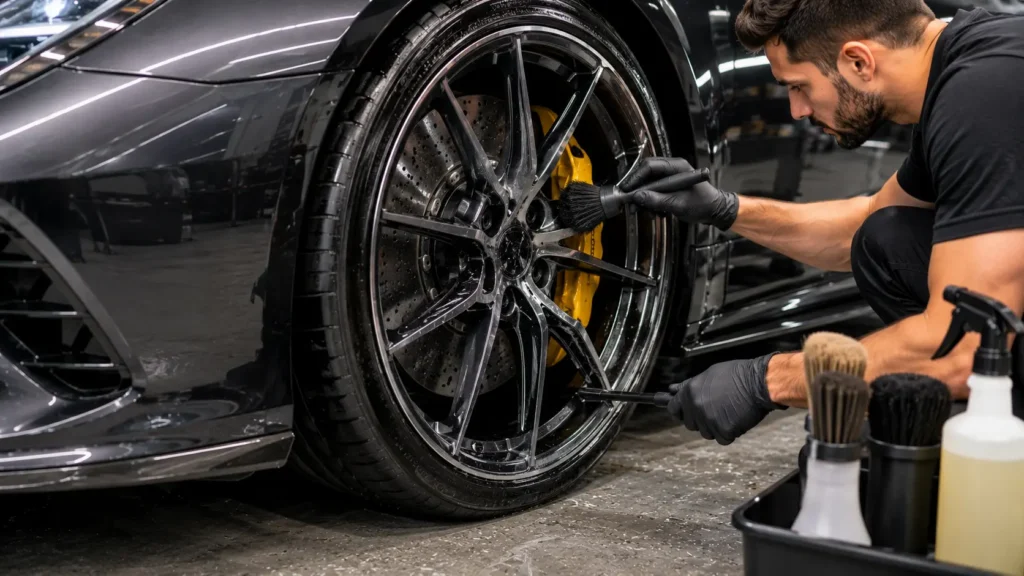
2. Start with wheels, tyres, and brake components
Performance brakes create a lot of brake dust, and sports car wheels often have complex shapes that trap grime deep in the barrels and around fasteners.
Start here because wheels are usually the dirtiest part of the vehicle. If you clean them last, you risk splashing brake dust and dirty water onto freshly washed paint.
Work carefully on:
- wheel faces
- barrels
- lug areas
- calipers
- tyre sidewalls
- wheel wells
Use a finish-safe wheel cleaner and soft brushes. Avoid harsh acidic cleaners unless the finish specifically allows them. Let hot brakes cool fully before you start.
3. Pre-wash before touching the paint
A sports car’s paint should not be touched until loose dirt has been softened and rinsed away. This is especially important on darker cars, softer clear coats, and vehicles that see highway driving or track days.
Apply a pre-wash foam or pre-cleaner, let it dwell, and rinse thoroughly. This reduces the amount of abrasive grime left on the surface before your hand wash.
Pay extra attention to:
- front bumper openings
- mirrors
- rocker panels
- lower doors
- rear bumper behind the wheels
- front splitter and diffuser areas
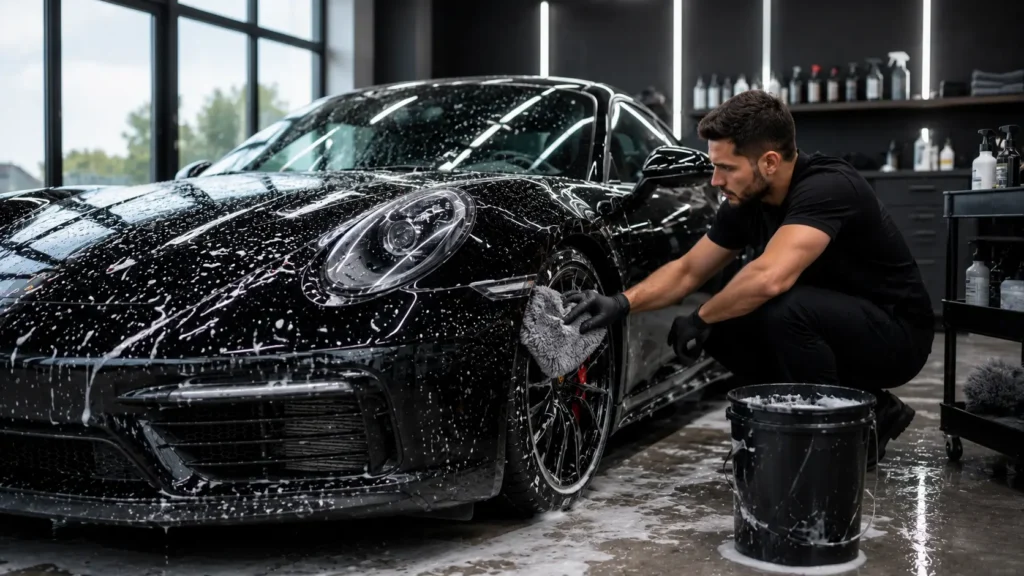
4. Hand-wash using the two-bucket method
Once the loose dirt is gone, hand-wash the sports car from the top down. Use one bucket for shampoo and one for rinsing your mitt.
Key rules:
- wash upper panels first
- leave the dirtiest lower sections for last
- rinse the mitt often
- use straight passes instead of tight circular scrubbing
- switch mitts if the lower sections are heavily soiled
This is one of the safest methods for sports car detailing because it reduces the chance of dragging grit back across delicate paint.
5. Clean the low-clearance areas separately
This is where many generic detailing guides fall short.
Sports cars often have:
- splitters
- canards
- side skirts
- diffusers
- lower intakes
- under-edge lips
These areas collect grit, rubber, road tar, and sand. They also scratch easily because they are low to the ground and often finished in gloss black, painted trim, or exposed composite material.
Use smaller tools, softer brushes, and more patience here. Do not force large mitts into tight areas.
6. Decontaminate the paint
Even after washing, the surface may still hold bonded contamination such as iron fallout, tar, bug residue, and embedded road film.
Use:
- an iron remover where needed
- tar remover on lower panels if necessary
- a clay bar or clay mitt with plenty of lubricant
Do not clay aggressively. The goal is to remove contamination without creating fresh marring. On sports cars with very soft paint, use the least aggressive method that gets the job done.
7. Dry with minimal contact
Drying is one of the easiest ways to scratch a sports car if you rush it.
Safer options:
- high-quality microfibre drying towels
- filtered warm air or touchless air drying
- blotting or laying the towel gently rather than scrubbing
Open mirrors, badges, vents, grilles, and trim seams may hold water. Blow out trapped water where possible so it does not drip later and mark the finish.
8. Inspect before polishing
Once clean and dry, inspect the paint under strong lighting.
Look for:
- swirl marks
- water spots
- haze
- fine scratches
- tar remnants
- leftover contamination
- stone-chip-prone areas
Do not automatically polish just because the car is clean. Some sports cars have very sensitive paint systems, and unnecessary polishing removes clear coat over time.
If the finish looks excellent, go straight to protection. If you see light defects, use the least aggressive correction method possible.
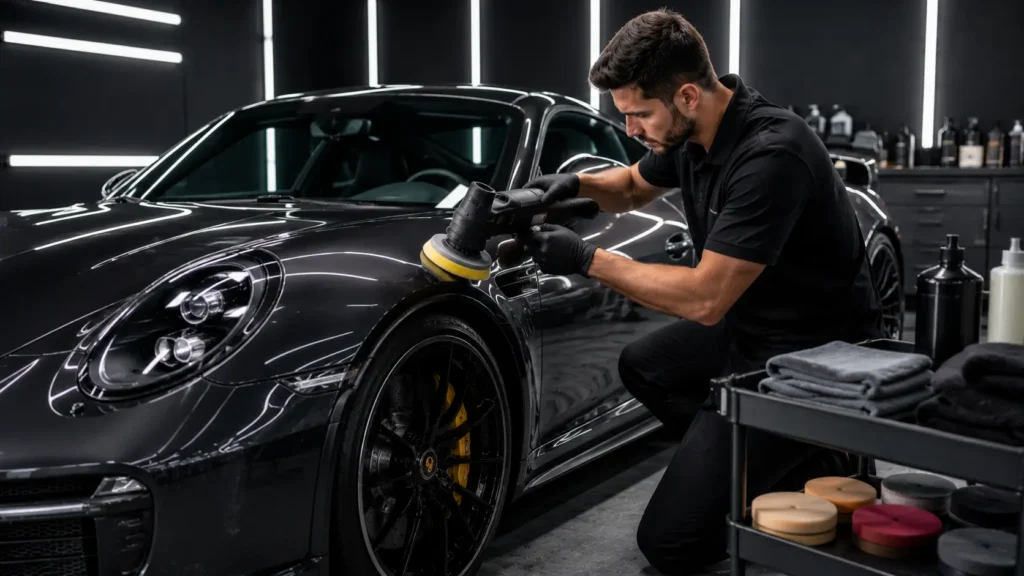
9. Correct the paint only when needed
Polishing can improve gloss and remove light defects, but it must be approached carefully on sports cars.
Polish when:
- swirls are visible
- the paint looks dull or hazy
- water spots or light etching remain after cleaning
Be cautious with:
- edges and body lines
- repainted panels
- gloss black pillars
- exposed carbon-fibre panels
- thin or delicate trim
Do not over-polish. A flawless finish is not worth unnecessary clear-coat removal.
10. Protect the finish
Once the paint is clean and corrected if needed, apply protection.
Options include:
- wax for short-term gloss
- sealant for longer durability
- ceramic topper or ceramic coating maintenance product
- full ceramic coating if the vehicle is being professionally protected
Protection helps with:
- easier maintenance washing
- UV resistance
- contamination release
- gloss retention
- reduced water spotting risk
For many owners, protection is what separates a clean sports car from a properly maintained one.
11. Detail the wheels, tyres, and brake areas again if needed
After the body is complete, check whether the wheels need a final wipe-down. Sports cars often sling water or cleaner into tight areas, and brake hardware is visually prominent.
Finish with:
- a clean microfibre wipe
- a non-greasy tyre dressing
- wheel protection if desired
Avoid overly glossy tyre products on performance cars if you want a more OEM or track-clean look.
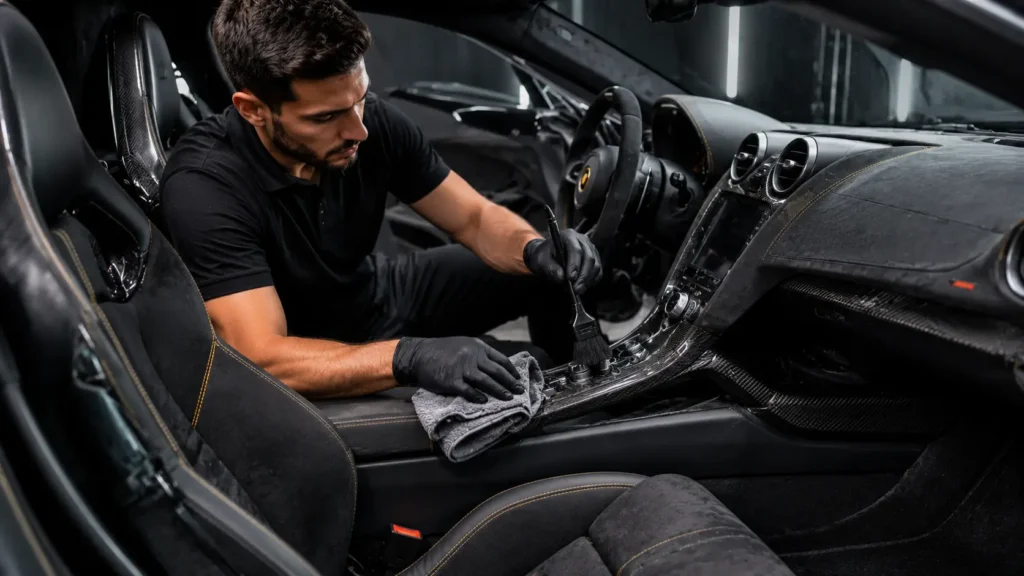
12. Clean the interior with material-specific care
A sports car interior is often more delicate than people expect.
Common materials include:
- leather
- Alcantara or suede-like trim
- contrast stitching
- carbon-fibre trim
- gloss black switch surrounds
- metal pedals and scuff plates
Use a different approach for each surface.
For leather
Clean gently, then condition if the material and finish require it.
For Alcantara
Use light agitation, very little moisture, and products designed for the material.
For gloss black trim
Use soft microfibre only. These surfaces mark extremely easily.
For carbon fibre
Use a gentle cleaner and avoid strong solvents or rough cloths.
Vacuum carefully around seat rails, bolsters, and storage pockets. Sports car cabins are tighter, so less aggressive movement usually gives better results.
13. Finish the details most people miss
The final 10 percent is what makes a sports car detail look complete.
Do not skip:
- door jambs
- fuel filler area
- exhaust tips
- number plate surrounds
- grilles and vents
- badges and emblems
- glass edges
- mirrors
- trunk or frunk seals
On sports cars, these areas stand out more because the vehicle has sharper lines and less visual clutter to hide missed grime.
How to detail a sports car in Canadian conditions
Canadian weather changes the detailing routine.
In winter
Road salt, sand, slush, and moisture buildup make pre-wash and underbody attention more important. Wash more often than you think if the car is driven year-round.
In spring
Do a more thorough decontamination. Winter residue often lingers in cracks, behind wheels, and along lower body panels.
In summer
Watch for bug splatter, tree sap, and UV stress. Hot paint should never be washed in direct sun.
In fall
Leaves, organic debris, and moisture trapped around seals and trim can lead to staining if ignored.
If the sports car is stored seasonally, do a proper clean before storage and another inspection detail when bringing it back out.
Common mistakes to avoid
- washing in direct sunlight
- using one bucket and one mitt for everything
- scrubbing low panels with the same mitt used on the bonnet and roof
- using household cleaners on paint, leather, or Alcantara
- polishing too often
- ignoring brake dust buildup
- using rough towels on gloss black trim
- over-wetting suede-like interior materials
- forgetting low-clearance aero parts and under-edge grime
- assuming every sports car finish can be treated the same way
DIY vs professional sports car detailing
| Option | Best for | Main advantage | Main drawback |
| DIY sports car detailing | Careful owners with time and the right tools | More control and lower long-term cost | Higher risk of mistakes if technique is weak |
| Professional sports car detailing | Owners who want correction, coating, or expert care | Better tools, lighting, and surface-specific skill | Higher upfront cost |
Professional help makes more sense when:
- the paint needs correction
- the car has PPF, matte paint, or sensitive trim
- the interior materials are high-end or hard to clean
- you want ceramic coating installed properly
- the vehicle has been neglected or stored poorly
Read Helpful content about car detailing cost.
Maintenance tips after a full detail
To keep the finish looking right:
- wash with safe products every 1–3 weeks depending on use
- remove bug splatter and bird droppings quickly
- avoid automatic brush washes
- inspect wheels and lower panels often
- use a drying aid or maintenance topper if appropriate
- keep dedicated towels for paint, wheels, and interior
- book professional correction only when truly needed
A sports car usually looks best when it is maintained lightly and consistently, not neglected and then aggressively corrected.
Final takeaway
If you want to know how to detail a sports car, the safest answer is to slow down, use the right tools, and treat every surface like it matters—because on a sports car, it does. Good sports car detailing protects paint, wheels, trim, and interior materials while preserving the look and feel that make the car special. Done properly, a detail is not just a clean-up. It is part of ownership care.
FAQ: how to detail a sports car
How often should you detail a sports car?
A light maintenance wash can be done every one to two weeks if the car is driven regularly. A more thorough detail every few months is a good baseline, with additional decontamination or correction only when needed.
What is the safest way to wash a sports car?
The safest method is a cool-shade wash using a pre-wash, two-bucket hand wash, clean microfibre tools, and gentle drying. Avoid automatic brush washes and harsh detergents.
Can I use a clay bar on a sports car?
Yes, but only with proper lubrication and light pressure. Soft paint can mar easily, so use the least aggressive method that removes contamination.
Should I polish a sports car every time I detail it?
No. Polishing should only be done when the paint actually needs correction. Over-polishing removes clear coat and can shorten the life of the finish.
How do you clean Alcantara in a sports car?
Use an Alcantara-safe cleaner, minimal moisture, soft agitation, and clean towels. Do not saturate the surface or scrub aggressively.
Is ceramic coating worth it for a sports car?
For many owners, yes. It can make routine cleaning easier, help protect the finish, and improve long-term appearance, especially on cars with delicate paint or limited road use.
Should I detail a sports car differently after a track day?
Yes. Track use often leaves heavier brake dust, rubber residue, bug remains, and heat-related grime. Let the car cool fully, clean the wheels carefully, and inspect the front end, lower panels, and brake areas more thoroughly.
What parts of a sports car are most often missed during detailing?
Front splitters, side skirts, rear diffusers, wheel barrels, brake calipers, vents, badges, exhaust tips, and tight interior seams are commonly missed.