


How long does ceramic coating last? On most daily-driven vehicles, ceramic coating usually lasts 2 to 5 years, but the real range is much wider. Entry-level spray ceramics may last only a few months, while premium professionally installed coatings can last 5 to 7 years and sometimes longer under ideal conditions. In Canada, winter salt, freeze-thaw cycles, UV exposure, washing habits, and product quality all influence how long ceramic coating lasts on a car.
What is ceramic coating?
Ceramic coating is a liquid paint-protection product that bonds to a vehicle’s clear coat and creates a durable, hydrophobic, chemical-resistant layer. It helps paint stay glossier, cleaner, and easier to wash while offering better resistance to UV rays, road grime, salt, tree sap, and chemical contamination than wax or many sealants. It is not paint protection film, and it is not a magical shield against rock chips or deep scratches.
The real answer: how long does ceramic coating last on a car?
For most vehicle owners, the most realistic answer looks like this:
- Spray ceramic products: around 3 to 12 months
- Ceramic-infused waxes or hybrids: around 2 to 6 months
- Entry-level professional coatings: around 1 to 2 years
- Mid-grade professional coatings: around 2 to 3 years
- High-end professional coatings: around 5 to 7 years
- Some premium systems under ideal conditions: can be marketed much longer, but real-world results still depend heavily on care and environment
Why lifespan claims vary so much
One of the biggest reasons ceramic coating confuses buyers is that lifespan claims are often presented without enough context.
Not all ceramic coatings are the same
A spray-on consumer product is not the same as a professional-grade coating. Some products are built for quick DIY application and short-term hydrophobic behaviour. Others are engineered for stronger chemical bonding, higher durability, and better long-term resistance. Competitor sources repeatedly point to product quality as a major durability factor.
“Lasting” can mean different things
A coating may still be present even if:
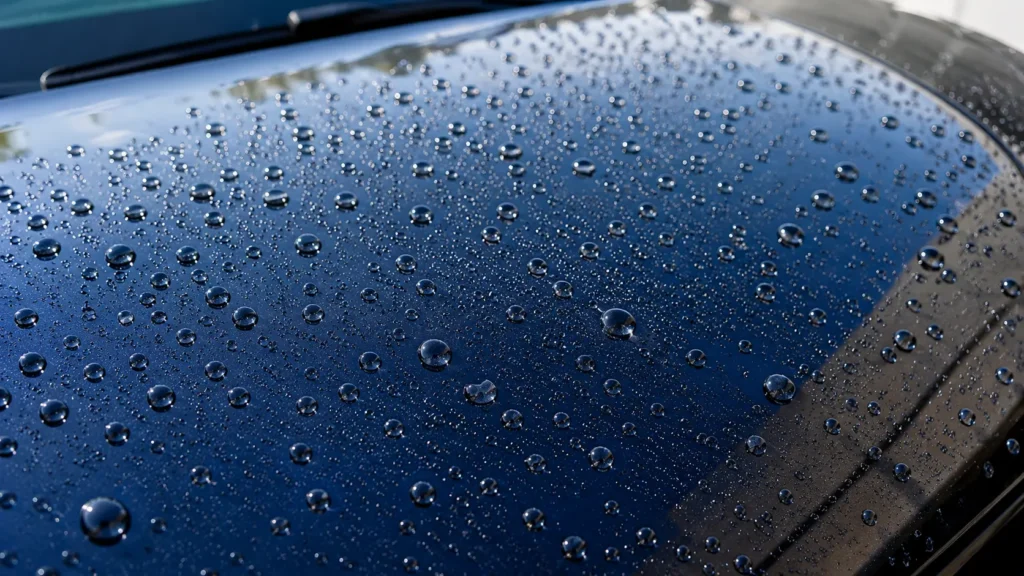
- water beading is weaker
- gloss is reduced
- the surface feels less slick
- contamination sticks more easily
That does not always mean the coating has completely failed. Sometimes it means the surface needs:
- a proper wash
- chemical decontamination
- a maintenance topper
- an inspection
This is a major content gap in many articles. Readers are often told what the lifespan is, but not how to interpret changes in real-world performance.
What affects how long ceramic coating lasts?
1. Product quality
Higher-quality coatings generally last longer than lighter consumer products. Professional coatings tend to use stronger chemistry, more controlled installation processes, and often come with more realistic maintenance expectations. Competitor sources from Chemical Guys, Ceramic Pro, and Spotless all highlight product type and quality as key variables.
2. Surface preparation before installation
Ceramic coating only performs well when it bonds to properly prepared paint. If the surface still has old wax, embedded contamination, oxidation, or polishing oils on it, the coating will not bond as effectively. Chemical Guys explicitly notes that skipping prep is one of the fastest ways to shorten coating life.
3. Application quality
Even a good coating can underperform if it is applied poorly. Ceramic Pro’s content stresses that the application process itself is one of the main factors behind durability. That is one reason professionally applied coatings usually outperform rushed DIY attempts.
4. Environmental exposure
Where and how the vehicle lives matters. Constant sun, bird droppings, tree sap, industrial fallout, dust, road grime, and harsh winter contamination all accelerate wear. Chemical Guys highlights environmental exposure as a primary factor, and Spotless Car Spa goes further by mapping the problem to Canadian weather specifically.
5. Maintenance routine
Regular washing with the right products can extend coating life significantly. Neglect, harsh chemicals, bad wash methods, and over-aggressive polishing can shorten it quickly. This is one of the clearest common threads across the sources you shared.
6. Driving habits
A garage-kept weekend car will usually hold a coating longer than a daily-driven vehicle that sees highway grit, winter salt, parking-lot fallout, and year-round outdoor storage. Chemical Guys explicitly includes driving habits as a meaningful factor.
Canadian weather and ceramic coating lifespan
For a Canadian audience, this is where the article needs more nuance than most generic US-focused pages provide.
Winter: salt, slush, and sand
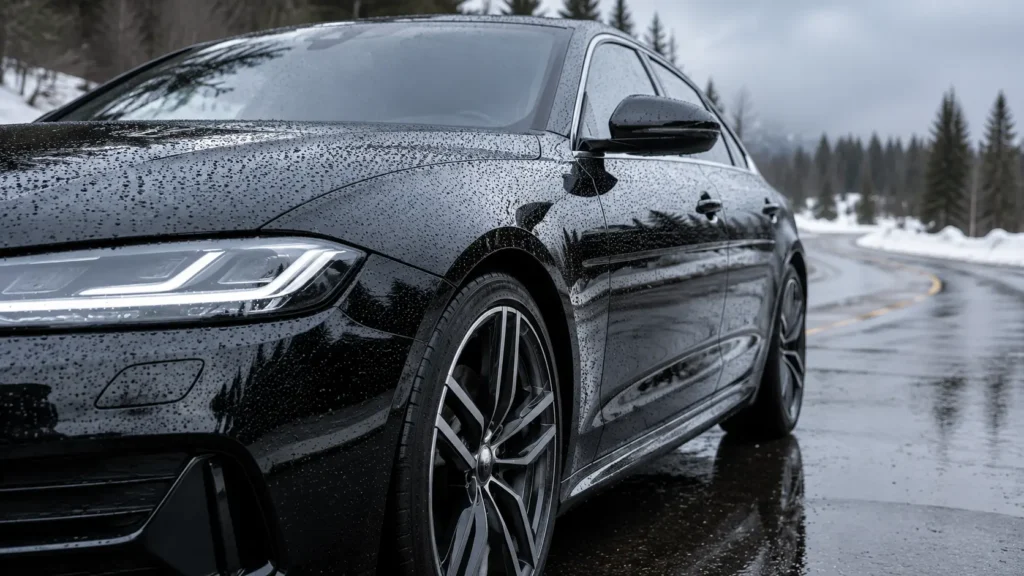
Canadian winters are hard on paint and hard on coatings. Road salt is corrosive, gritty slush adds abrasion risk, and repeated freeze-thaw cycles create more stress than a mild climate does. Spotless Car Spa’s article does a strong job surfacing this specifically for Ontario conditions, noting that salt, slush, and freezing conditions wear down even good coatings over time.
Spring: moisture, sap, pollen, and post-winter contamination
Spring often brings lingering grime, acidic contamination, and sticky debris that need to be removed properly. If a coating comes out of winter clogged with contaminants, it may seem weaker than it really is.
Summer: UV rays and bug splatter
Ceramic coatings help resist UV damage and make bug residue easier to remove, but long hot months still add wear. Spotless notes that summer heat and bug acids are both real concerns.
Fall: wet leaves and temperature swings
Temperature swings and organic debris can also challenge coating performance, especially for lower-quality products.
Canadian takeaway
If you live in Canada and use your car year-round, you should expect a coating to perform closer to its realistic maintenance-dependent range, not the most optimistic marketing claim.
How long different types of ceramic coating usually last
Spray ceramic coatings
Spray ceramics are the lightest end of the spectrum. They are easy to use, affordable, and great for DIY maintenance, but they are not long-term substitutes for premium professional ceramic coating.
Typical lifespan:
- about 3 to 12 months, depending on the product and conditions
Best for:
- DIY users
- short-term protection boosts
- topping existing protection
- seasonal refreshes
Ceramic-infused waxes and hybrid products
These products can improve gloss and water behaviour, but they usually do not offer the same durability as stronger ceramic systems.
Typical lifespan:
- about 2 to 6 months
Best for:
- budget-conscious users
- lower-commitment care routines
- appearance-focused maintenance
Entry-level professional coatings
These are a step above consumer products and often provide a solid starting point for drivers who want more durability without jumping to the highest price tier.
Typical lifespan:
- about 1 to 2 years in realistic use
Mid-grade professional coatings
These coatings tend to offer a better balance between durability, maintenance ease, and cost.
Typical lifespan:
- about 2 to 3 years
High-end professional coatings
These are the products most often associated with long-term ceramic protection.
Typical lifespan:
- about 5 to 7 years with proper prep and maintenance
Signs your ceramic coating is wearing out
A ceramic coating does not usually “disappear” all at once. It tends to weaken gradually.
Common warning signs include:
- reduced water beading or sheeting
- less gloss and depth
- more frequent dirt buildup
- less slickness after washing
- contamination sticking more easily
- patchy behaviour across different panels
Chemical Guys specifically calls out fading gloss, loss of water beading, and increased dirt buildup as signs that a coating may be worn and due for refreshment.
Important note:
Those signs do not always mean total failure. Sometimes they mean the coating is contaminated and needs proper cleaning or a topper.
What can make ceramic coating wear out faster?
Several competitor articles mention this, but the subject deserves a clearer explanation.
Harsh chemicals
Overly aggressive soaps, degreasers, and incompatible cleaners can degrade the coating’s top layer and shorten its useful life. Glasslife and Chemical Guys both warn about harsh chemicals.
Bad washing methods
Dirty mitts, automatic brush washes, and poor wash technique increase marring and coating wear. Glasslife emphasizes the two-bucket method, and Spotless warns against touch car washes.
Skipping routine washing
Letting contamination sit too long is one of the easiest ways to shorten lifespan. Salt, sap, bug remains, bird droppings, and industrial fallout should not be left to bake on the surface.
Improper curing after application
Chemical Guys notes that rushing the cure period can compromise the coating early. Their content references 24 to 48 hours for light exposure risk and up to about a week for full hardness.
Polishing over the coating
Glasslife explicitly warns that polishing the coated surface can reduce effectiveness and wear it down faster.
Extreme weather exposure
Severe heat, severe cold, road salt, and year-round outdoor exposure can all reduce real-world lifespan.
How to make ceramic coating last longer
If you want better longevity, the answer is not constant reapplication. It is good maintenance discipline.
Wash regularly
A coated vehicle still needs washing. Spotless recommends washing at least every 2 to 3 weeks, and more often in winter.
Use pH-neutral, ceramic-safe shampoo
This is one of the most repeated and most important recommendations across the competitor set.
Remove contamination quickly
Road salt, bird droppings, tree sap, and bug residue should not sit on the paint longer than necessary.
Avoid automated brush washes
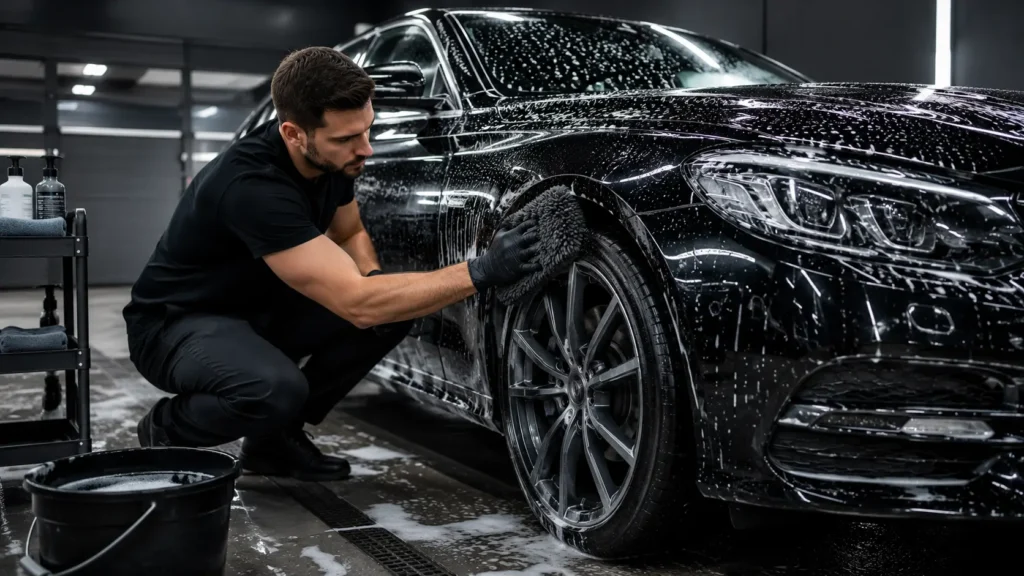
Brushes can scratch and dull the coating. Touchless or careful hand washing is safer.
Use maintenance boosters when appropriate
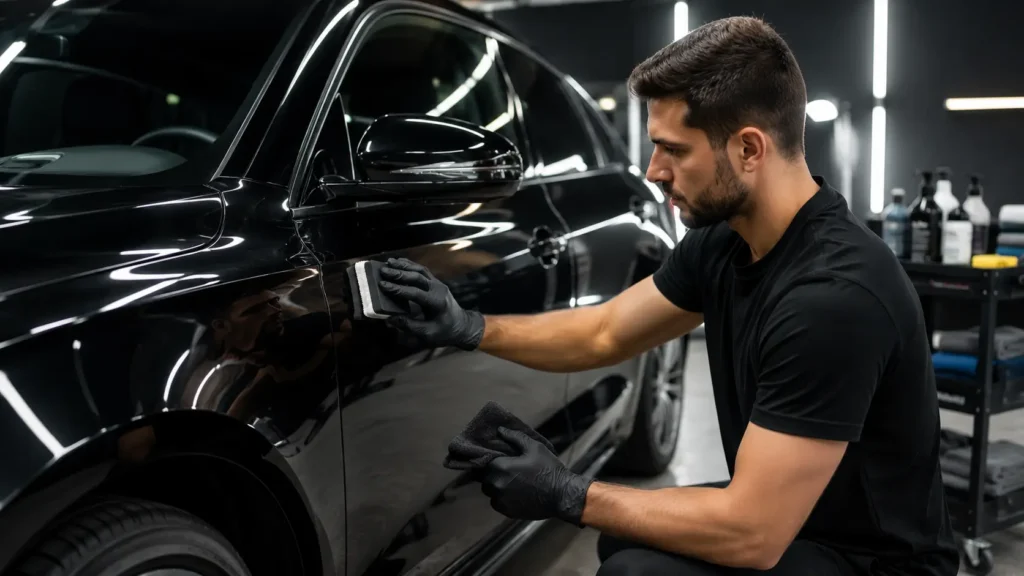
Ceramic maintenance sprays or toppers can refresh hydrophobic behaviour and gloss. Both Chemical Guys and Spotless discuss this idea.
Get periodic inspections
Annual inspections, decontamination, or maintenance washes can help spot early issues and extend performance.
Is ceramic coating still worth it if it does not last forever?
Yes, for many car owners it still is.
The key is to understand what you are buying:
- not permanent perfection
- not chip-proof protection
- not zero maintenance
You are buying:
- easier cleaning
- stronger contamination resistance
- improved gloss retention
- longer-lasting protection than wax or most sealants
- better long-term appearance management
Pros and cons of ceramic coating longevity
Pros
- Can last much longer than wax or sealants
- Makes regular washing easier
- Helps resist UV damage, salt, sap, and grime
- Keeps paint looking glossier for longer
- Can offer strong value over several years
Cons
- Lifespan varies more than marketing often suggests
- Prep and application quality matter a lot
- It still requires maintenance
- Harsh climate and poor washing can shorten life quickly
- Water beading alone is not the only measure of performance
Common misconceptions
“Ceramic coating lasts forever.”
No. Even premium systems wear over time. Competitor sources consistently frame lifespan as variable, not permanent.
“If water stops beading, the coating is completely gone.”
Not always. The surface may simply need washing, decontamination, or a topper.
“All ceramic coatings last the same length of time.”
No. Spray ceramics, hybrid products, entry-level coatings, and high-end professional coatings have very different performance ceilings.
“Once applied, it needs no maintenance.”
False. Spotless explicitly calls this a myth, and it is one of the most important points in the whole topic.
Practical examples
Example 1: Daily-driven car in Ontario
A daily-driven sedan parked outside year-round and exposed to winter salt may see:
- about 1 to 3 years from lighter or mid-tier protection
- about 2 to 5+ years from stronger professional systems with proper care
Example 2: Garage-kept weekend car
A garage-kept vehicle with light mileage and careful maintenance may hold performance closer to the upper end of the quoted lifespan range.
Example 3: DIY spray coating user
A driver using a retail spray ceramic may get solid gloss and water behaviour for a season, but should not expect multi-year performance.
Final takeaway
If you are asking how long does ceramic coating last, the most honest answer is: longer than wax, but only as long as the product, prep, environment, and maintenance allow. For Canadian drivers, realistic expectations matter. A well-installed, well-maintained ceramic coating for a vehicle can deliver years of easier washing, better gloss retention, and stronger protection against salt, UV, and seasonal contamination—but it still needs care to perform at its best.
FAQ: how long does ceramic coating last
How long does ceramic coating last on a car?
On a car that is driven regularly, ceramic coating usually lasts 2 to 5 years, but the real range can be shorter for spray ceramics and longer for premium professional coatings with strong maintenance.
How long does ceramic coating last in Canada?
In Canadian conditions, ceramic coating often lasts less than the most optimistic marketing claims unless the vehicle is well maintained. Winter salt, slush, freeze-thaw cycles, and seasonal contamination all add wear.
Does ceramic coating last longer than wax?
Yes. Wax usually lasts weeks to a few months, while ceramic coating can last months to years depending on the product category and maintenance.
How do I know if my ceramic coating is failing?
Common signs include weaker water beading, duller gloss, more frequent dirt buildup, and less slickness after washing.
Can I make ceramic coating last longer?
Yes. Wash regularly, use pH-neutral shampoo, avoid brush washes, remove contaminants quickly, and use maintenance toppers or inspections where appropriate.
Does ceramic coating need to be reapplied?
Eventually, yes. Even durable coatings wear down over time and may need refreshing, topping, or replacement depending on how they are used and maintained.
Is professionally applied ceramic coating worth it?
For many owners, yes—especially if they want stronger longevity, easier maintenance, and better long-term paint protection than wax or lighter consumer products typically provide.