

Quick answer: Not automatically. For most daily drivers, a well-maintained touchless or soft-cloth car wash is a good choice, and it’s far better than leaving road salt on your vehicle all winter. The real risks come from poorly maintained equipment, harsh chemicals, and poorly filtered recycled water. Over time, these can cause swirl marks, water spots, and faster wear on wax or coatings.
So the better question isn’t whether gas station car washes are good or bad. It’s which type you’re using, how well it’s maintained, and what your vehicle needs. This guide explains the real risks and when to skip the automatic wash. It also covers how to get a safe, clean result through a Canadian winter.
How Gas Station Car Washes Work
Most gas stations in Canada offer one or more of these car wash options.
Soft-Touch (Friction) Car Washes
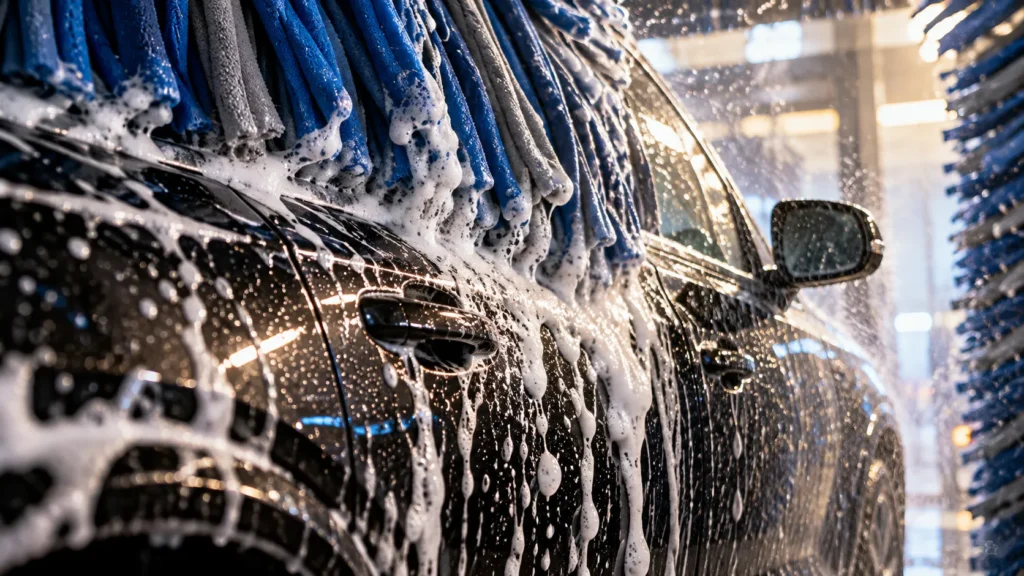
A soft-touch wash uses rotating strips of foam or soft cloth to scrub your vehicle after a presoak and rinse. These materials are typically gentler on paint than older, more abrasive brush designs. However, even soft materials can cause fine scratches if grit remains on the vehicle or the equipment is poorly maintained. A thorough pre-rinse and regular equipment cleaning are essential. Because friction washes physically agitate the surface, they usually remove more road film than touchless systems.
Touchless Car Washes
A touchless wash never physically touches your paint. Instead, it relies on high-pressure water and stronger chemical presoaks, often a two-step process that pairs an alkaline (high-pH) cleaner with an acidic (low-pH) one. There’s no friction, so the risk of contact scratches is low. The trade-off is that stronger chemicals can wear down wax and sealants faster, and a thin layer of road grime may stay behind.
Self-Serve Wand Bays
Self-serve bays give you a pressure wand, a foam brush, and a timer. You control the process, which can be good or bad depending on your technique.
| Wash type | How it cleans | Main strength | Main risk | Best for |
| Soft-touch | Foam or cloth strips plus soap | Strong cleaning power | Swirl marks if poorly maintained | Daily drivers with heavy grime |
| Touchless | High-pressure water plus strong chemicals | No physical contact | Faster wax and sealant wear, leftover film | Ceramic-coated or darker vehicles, frequent winter rinses |
| Self-serve bay | You control wand and brush | Low cost, full control | Gritty foam brush, too much pressure up close | Salt rinses, wheels, underbody |
Are Gas Station Car Washes Bad for Your Paint?
Your paint’s top layer is a thin clear coat. Swirl marks are fine scratches in that clear coat, usually caused when dirt and grit get dragged across the surface. Whether a gas station car wash causes them depends mostly on maintenance and wash type.
Soft-touch washes are only as safe as their upkeep. If the presoak is weak or the foam strips are worn, grit left by the previous vehicle (say, a muddy pickup) can rub against your paint. A well-run wash with fresh materials and a thorough pre-rinse poses much less risk.
Touchless washes avoid friction entirely, but they make up for it with stronger chemistry. Occasional use is fine. Frequent use can shorten the life of wax or sealant, which leaves your paint less protected between details.
A practical example: Picture a black SUV that goes through the same soft-touch wash every week from December to March. By spring, it may show visible swirls under parking-lot lights. A silver sedan with the same routine might look unchanged, because lighter colours hide fine scratches much better than dark ones.
The Hidden Risks Most Drivers Overlook
- Recycled water: Many car washes reclaim and filter the water used during the main wash cycle, which reduces water use. The final rinse is a separate stage: quality washes finish with fresh water or a filtered spot-free rinse. If filtration is poor or the final rinse uses untreated water, minerals can stay behind and dry into spots.
- Air dryers and water spots: Blowers rarely remove every drop. Leftover water can dry into mineral spots, and in strong sun those spots can etch into the clear coat if you leave them too long.
- Mechanical damage: Antennas, roof racks, bike racks, light bars, wiper blades, and loose trim can get caught or bent. Many car washes post signs saying they aren’t responsible for aftermarket accessories.
- “Wax” and “ceramic” add-ons: Spray-on protection at a gas station adds gloss and helps water bead for a short time. Durability varies by product, so don’t treat it as a replacement for a properly applied wax, sealant, or ceramic coating.
Pros and Cons of Gas Station Car Washes
| Pros | Cons |
| Fast and convenient, often done while you refuel | Equipment quality and maintenance vary widely |
| Affordable, especially with fuel discounts or memberships | Soft-touch washes can cause swirl marks if poorly maintained |
| Removes winter road salt quickly, including underbody options | Touchless chemicals can wear down wax and sealants |
| Usually better for the environment than driveway washing | Air drying often leaves water spots |
| Available year-round, even in cold weather | Can miss lower panels, wheel barrels, and tight areas |
| Touchless options avoid physical contact | Risk to accessories, mirrors, and loose trim |
Touchless vs Soft-Touch vs Hand Wash: Which Is Best?
| Factor | Touchless | Soft-touch | Professional hand wash |
| Paint safety | Low scratch risk; chemical strength matters | Depends on pre-rinse, equipment, and maintenance | Potentially excellent with proper technique |
| Cleaning power | Moderate | High | High, with closer attention to detail areas |
| Speed | Very fast | Very fast | Slower |
| Relative cost | Low | Low | Moderate to higher |
| Winter salt removal | Good with underbody spray | Good with underbody spray | Good on body panels; underbody only if included |
| Best for | Frequent winter rinses, coated cars | Heavy grime on daily drivers | New, dark, coated, or high-value vehicles |
There isn’t one perfect option for everyone. Many Canadian drivers get the best results by combining them: quick touchless rinses with underbody spray through winter to control salt, plus a professional hand wash every month or so for a thorough clean.
Are Gas Station Car Washes Bad in Winter?
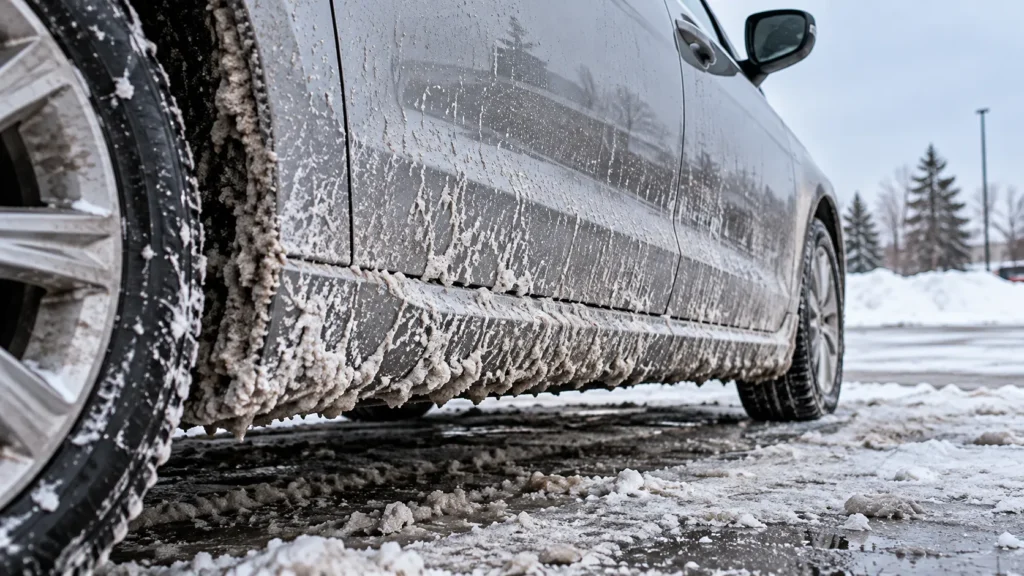
For Canadian drivers, winter is when a car wash matters most. Road salts are inorganic chloride salts, and Canada uses an average of about 5 million tonnes of them on its roadways each year (Environment and Climate Change Canada). Chloride salts and liquid brines speed up corrosion on brake lines, exhaust parts, wheel wells, and the underbody. Brines are especially hard to deal with because they can reach seams and crevices and leave chloride residue behind.
A gas station car wash is one of the easiest ways to fight that buildup. Follow these winter tips:
- Choose the underbody spray. It reaches the areas where salt does the most damage and where you can’t easily clean yourself.
- Wash about every two weeks as a practical guideline. AAA describes washing every two weeks during winter, and more often after heavy snowfall, as a good rule of thumb, and calls undercarriage cleaning essential (AAA).
- Pick a milder day. Washing near or above freezing reduces the risk of frozen doors, locks, and seals.
- Dry the door jambs and rubber seals with a towel before you leave, then open and close each door once to keep them from freezing shut.
- Dry your brakes safely. Once you’re rolling slowly in a safe spot, apply the brakes lightly a few times to help dry them, following any instructions in your owner’s manual.
Keep in mind that washing removes salt, but it doesn’t protect bare metal. If rust protection is your concern, pair regular washing with rustproofing or an undercoating treatment.
Which Vehicles Should Skip Gas Station Car Washes?
Some vehicles need a gentler approach:
- Freshly repainted vehicles: New paint needs time to cure fully. Ask your body shop how long to wait before using an automatic car wash.
- Matte paint finishes: Waxes and polishes in automatic washes can leave shiny patches on matte paint. Follow your manufacturer’s care instructions.
- Ceramic-coated vehicles: Touchless washes avoid friction, but strong cleaners can strip coating toppers and maintenance sprays, and some coatings may wear faster than others. Follow your installer’s care instructions.
- Dark-coloured and high-value vehicles: Black, dark blue, and dark grey paint shows swirl marks quickly.
- Classic and collector cars: Older single-stage paint and fragile trim usually call for hand care.
- Vehicles with accessories or modifications: Roof boxes, bike racks, light bars, oversized tires, and lifted suspensions may exceed the wash’s size limits or get caught in the equipment.
- Convertibles with soft tops: Check your owner’s manual, since high pressure can strain fabric tops and seals.
- Vehicles with paint chips or loose trim: High-pressure water can lift paint at the edges of chips and loosen weak trim.
Common Misconceptions About Gas Station Car Washes
“Touchless washes are 100% safe.” They avoid contact scratches, but stronger chemicals can wear down protection faster, and they often leave a thin film of grime behind.
“Brush car washes always scratch your car.” Modern foam and cloth materials are gentler than older brush designs, and a well-maintained soft-touch wash poses low risk for most daily drivers. Maintenance is what makes the difference.
“Washing your car in winter causes rust.” The opposite is true. Leaving salt on your vehicle causes corrosion; regular washing removes it.
“Rain washes your car for free.” Rain isn’t a reliable substitute for washing. It carries pollutants and dust, leaves spots as it dries, and does little for salt packed underneath your vehicle.
“Hand washing is always better.” A professional hand wash done properly can be the gentlest option. A careless hand wash with one bucket and a gritty sponge, though, can cause more scratches than a good automatic wash.
“The wax at the car wash protects my paint for months.” Durability varies by product, but most spray-on car wash protection is short-lived. Don’t treat it as long-term protection.
How to Use a Gas Station Car Wash Safely
- Check the wash first. Look for clean foam strips, a tidy bay, and recent positive reviews. If the equipment looks worn or dirty, go elsewhere.
- Prepare your vehicle. Fold in mirrors, lower or remove the antenna, close all windows and the sunroof, and remove bike racks or roof boxes.
- Turn off automatic wipers. Rain-sensing wipers can switch on inside the wash and get damaged.
- Use car wash mode if your vehicle has one. Some vehicles with electronic parking brakes or auto-hold features need a special setting to roll freely through the wash. Check your owner’s manual.
- Add the underbody spray in winter. This one is worth the extra cost from November to April.
- Skip the self-serve foam brush, or rinse it thoroughly first. Other drivers often use it to scrub muddy wheels and truck beds.
- Keep the pressure wand at a safe distance. Follow your owner’s manual for the minimum distance; around 30 centimetres is a common guideline. Don’t concentrate the jet on chips, damaged paint, emblems, or rubber seals.
- Dry what the blower misses. Use a clean microfiber towel on windows, mirrors, and door jambs to prevent spots and frozen seals.
- Inspect your vehicle before leaving. If you notice damage, report it to the attendant right away and take photos.
What to Look for When Choosing a Car Wash
When you’re comparing car wash options, look for:
- Well-maintained equipment, with clean foam strips and visible upkeep
- A spot-free rinse, usually made with filtered or reverse osmosis water
- An underbody wash option for Canadian winters
- Reviews that mention the results, and watch for repeated complaints about scratches or damage
- A clear damage policy posted at the entrance
- Membership value, which can make an unlimited plan worthwhile if you wash often in winter
- Staff on site who can help if something goes wrong
When a Professional Hand Wash Makes More Sense
A professional hand wash is often the best choice when paint condition matters most, but results depend on the detailer’s methods and equipment. Reputable detailers may use controlled, low-contact techniques such as pH-neutral soap, the two-bucket method, and clean microfiber towels. They can also give closer attention to the areas automatic washes often miss: lower door panels, wheel barrels, mirrors, grilles, and bumpers.
A hand wash makes the most sense in these situations:
- You drive a new, dark-coloured, or ceramic-coated vehicle.
- You want a thorough clean before winter starts or after salt season ends.
- Your vehicle has heavy brake dust, road film, or salt buildup on the lower panels.
- You’re preparing to sell your vehicle or want it to look its best.
Keep in mind that an exterior hand wash focuses on the body, wheels, and glass. It doesn’t necessarily include an undercarriage rinse, so in winter, ask whether underbody cleaning is included or pair your hand wash with an underbody rinse.
If you’re in the area and want that level of care, our Car Wash Orleans service at Orleans Auto Club includes a foam pre-soak, hand wash, wheel and tire cleaning, and microfiber drying.
A Simple Car Wash Routine for Canadian Drivers
| Season | What to do | Why it matters |
| Fall | Get a thorough wash, then apply wax, sealant, or a coating | It builds a protective barrier before salt season |
| Winter | Wash about every two weeks with underbody spray, and more often after heavy salting | It controls salt and brine buildup |
| Spring | Book a thorough wash, and make sure the underbody gets rinsed | It removes leftover salt and grime from winter |
| Summer | Wash every two to three weeks, and remove bird droppings and sap quickly | It prevents etching and stains in the heat |
Frequently Asked Questions
Do gas station car washes scratch your car?
They can, but it’s not guaranteed. Poorly maintained soft-touch washes are the main cause of swirl marks. A well-maintained foam or cloth wash poses low risk for most daily drivers, and touchless washes don’t touch the paint at all.
Is a touchless car wash safe for my car?
Yes, touchless washes are safe for most vehicles. They avoid friction scratches, but their stronger chemicals can wear down wax and sealants faster, and they may not remove all road film. Check your owner’s manual, since some manufacturers restrict certain wash types or cleaning chemicals.
Are gas station car washes bad for ceramic coating?
Occasional touchless washes are generally fine for most ceramic coatings. Harsh cleaners can strip toppers and maintenance sprays, and frequent friction washes may wear some coatings faster than others. Follow your installer’s care instructions for the best results.
How often should I wash my car in winter in Canada?
About every two weeks is a practical guideline, plus a wash after heavy snowfalls or when roads are heavily salted. Choose an underbody spray whenever it’s available.
Is it bad to go through a car wash when it’s below freezing?
It’s not harmful in itself, but doors, locks, and seals can freeze afterward. Wash on a milder day when possible, and dry the door jambs and rubber seals before driving away.
Are automatic car washes bad for new cars?
Factory finishes are generally cured before delivery, so most new vehicles can use an automatic wash. The exception is a car with fresh body-shop paint, which needs time to cure. Owners of new dark-coloured vehicles who want to avoid swirl marks often choose touchless or hand washing.
Is hand washing better than a gas station car wash?
A professional hand wash done with proper technique can be the gentlest and most thorough option. A careless hand wash, though, can cause more scratches than a well-maintained automatic wash. Technique matters more than the method.
Is the wax at a gas station car wash worth it?
It adds short-term shine and helps water bead off. Durability varies by product, but think of it as a top-up, not real paint protection.
Can a car wash damage my side mirrors or antenna?
Yes, especially with aftermarket parts, loose trim, or fixed antennas. Fold in your mirrors, remove or lower the antenna, and take off racks before entering.
Are gas station car washes better for the environment than washing at home?
Usually, yes. In many Canadian cities, driveway runoff flows into storm drains that empty into local rivers and creeks without treatment. [Source needed: City of Ottawa stormwater page] Commercial car washes typically send wastewater to the sanitary sewer for treatment, and many recycle their water.