


How long does it take to tint car windows? Most professional car window tinting appointments take 1.5 to 4 hours, depending on the vehicle size, number of windows, film type, glass shape, and whether old tint needs removal. Two front windows may take 30–60 minutes, while a full sedan usually takes 2–3 hours. Larger SUVs, vans, and vehicles with complex rear glass can take longer.
That answer covers the actual installation appointment. The tint still needs extra time to dry and cure after the vehicle leaves the shop.
Quick Answer: Car Window Tinting Time by Job Type
| Tinting Job | Estimated Time |
|---|---|
| Two front windows | 30–60 minutes |
| Front and rear side windows | 1–2 hours |
| Full sedan | 2–3 hours |
| Full SUV or crossover | 3–5 hours |
| Full van | 4–6 hours |
| Rear windshield only | 45–90 minutes |
| Old tint removal before new tint | Adds 30 minutes to several hours |
| DIY tinting | Half a day or longer for beginners |
These are general estimates. A professional installer can give a more accurate time after checking the vehicle, glass condition, and tint film choice.
Installation Time vs Curing Time
Many drivers ask how long car window tinting takes, but they often mean two different things.
Installation time is the time needed to clean the glass, cut the film, apply the tint, remove air and water, trim the edges, and inspect the work.
Curing time is the drying period after installation. During curing, moisture evaporates from between the glass and film, and the adhesive bonds properly.
Your vehicle may be ready to drive the same day, but the tint may still need several days to cure. In cold Canadian weather, curing can take longer than it would in warm, dry conditions.
What Happens During a Professional Tint Appointment?
A good tint job is not just about placing film on glass. The installer follows a careful process to avoid bubbles, creases, peeling edges, and visibility problems.
1. Window Inspection
The installer checks the glass for scratches, chips, old tint, adhesive residue, dust, pet hair, defroster lines, and rubber seals. This inspection helps prevent installation problems.
2. Glass Cleaning
Clean glass is essential. Dirt, oil, lint, and old glue can show under the film. This step can take longer if the vehicle is dusty, has pet hair, or already has damaged tint.
3. Film Cutting and Shaping
The film must match each window precisely. Some shops use computer-cut patterns, while others hand-cut the film. Curved rear windshields often need heat shrinking, which takes more time and skill.
4. Tint Application
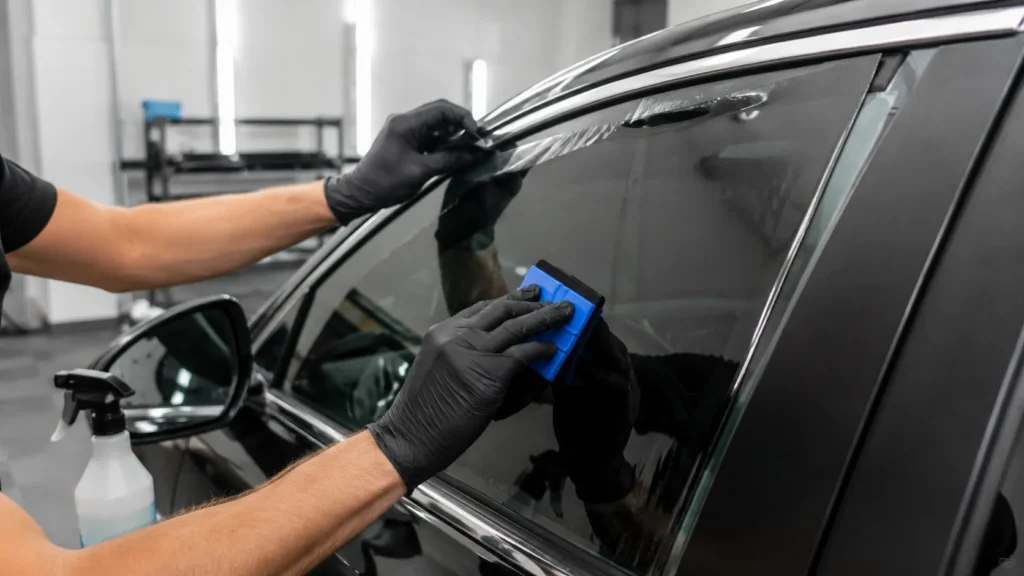
The installer applies the film to the inside of the glass using a slip solution. Then they use a squeegee to remove water and air while aligning the film carefully.
5. Final Inspection
The installer checks the edges, visibility, bubbles, alignment, and finish. Small moisture spots may appear right after installation, but they usually fade during curing.
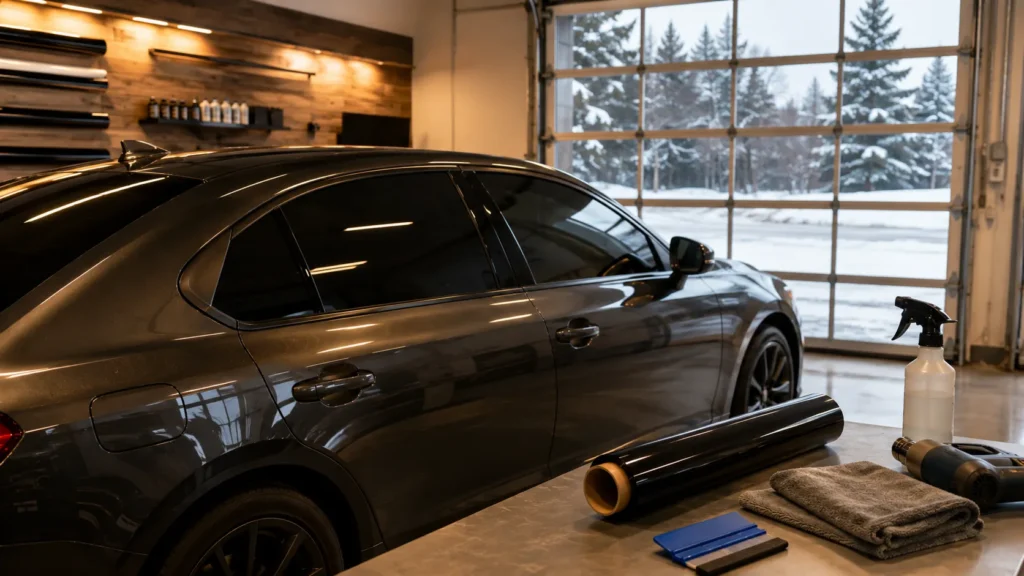
How Long Does It Take to Tint Different Vehicles?
Compact Cars
A compact car usually takes 1.5 to 2.5 hours for a full tint job. Smaller glass areas and fewer windows help speed up the process.
Sedans
A full sedan usually takes 2 to 3 hours. This is one of the most common tinting jobs and usually includes side windows and the rear windshield.
SUVs and Crossovers
SUVs and crossovers usually take 3 to 5 hours because they have more glass, larger rear windows, and extra quarter windows.
Pickup Trucks
A pickup truck may take 1 to 3 hours, depending on whether you tint only the front windows, the rear glass, or the full cab.
Vans
Vans can take 4 to 6 hours because they often have many large windows. Passenger vans may need even more time if every rear window is tinted.
Luxury Vehicles and EVs
Luxury vehicles and electric vehicles may require extra care because of curved glass, frameless doors, sensors, electronics, or panoramic roof sections. These vehicles can take longer, even if the window count seems normal.
What Affects How Long It Takes to Tint Car Windows?
Number of Windows
The more windows you tint, the longer the appointment takes. Two front windows are quick. A full vehicle takes longer because every window needs cleaning, cutting, applying, and inspection.
Window Shape
Flat windows are easier to tint. Curved rear windshields, small quarter windows, and complex glass shapes take more time because the film must be shaped correctly.
Film Type
Dyed, carbon, metallic, and ceramic tint films handle differently. Ceramic tint often costs more, but many drivers choose it for heat rejection and comfort. High-quality film may require more careful installation.
Old Tint Removal
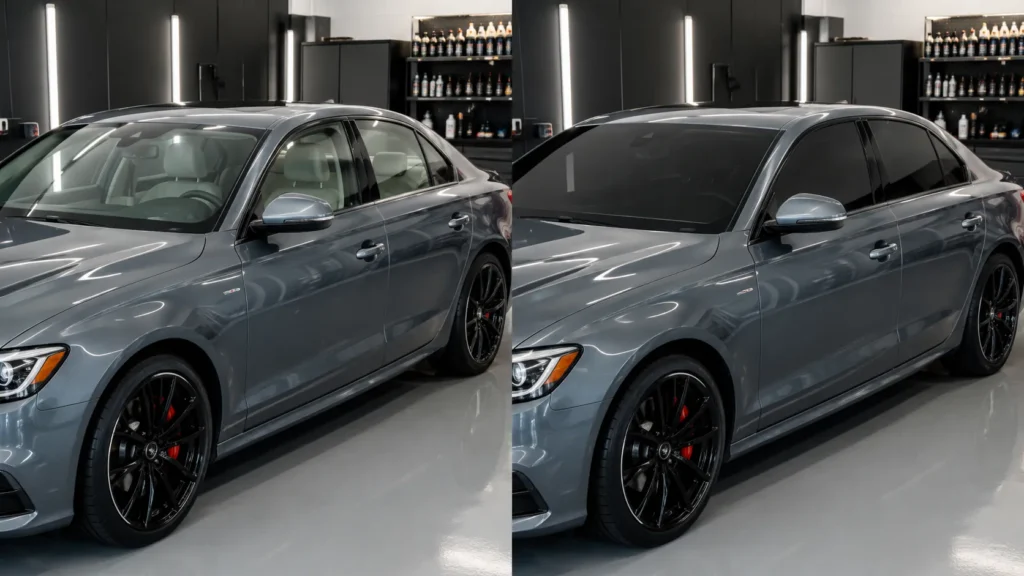
Old tint can add a lot of time. If the existing film is bubbling, purple, brittle, or stuck strongly to the glass, removal may take several hours.
For a full removal guide, read that how to remove car window tint.
Adhesive Residue
After old film comes off, glue may remain on the window. The installer must remove this residue before applying new film. If glue remains, the new tint may not sit smoothly.
Read the full guide about how to remove adhesive from tinted windows.
Rear Defroster Lines
Rear windows with defroster lines need extra care. Scraping too aggressively can damage the lines, so installers often work slowly around them.
Installer Experience
A skilled installer can work efficiently without rushing. Fast does not always mean better, and slow does not always mean poor. Quality depends on preparation, technique, and attention to detail.
Weather and Season
Weather matters, especially in Canada. Cold temperatures, humidity, rain, snow, and limited sunlight can slow the curing process. The installation can still be done indoors, but the film may need more time before it fully dries.
Can You Drive Right After Tinting?
Yes, you can usually drive your car right after the tint appointment. Driving will not normally damage the tint because the film is installed on the inside of the glass.
However, you should avoid rolling the windows down until the tint has cured enough. Many installers recommend waiting 3 to 5 days, but winter conditions may require a longer wait.
How Long Before You Can Roll Down Tinted Windows?
Most drivers should wait at least 3 to 5 days before rolling down freshly tinted windows. In colder Canadian weather, waiting 5 to 7 days may be safer.
Rolling windows down too early can cause:
- Peeling edges
- Scratches
- Film movement
- Creases
- Air bubbles
- Poor adhesion
Always follow the installer’s aftercare advice because film type, temperature, humidity, and vehicle storage can change the timeline.
How Long Does Window Tint Take to Fully Cure?
Window tint may take several days to two weeks to fully cure. Warm, dry weather speeds up curing. Cold, damp, or cloudy weather slows it down.
During curing, you may notice light haze, small water pockets, or tiny bubbles. These are often normal. But large bubbles, wrinkles, dirt spots, lifting edges, or worsening visibility should be checked by the installer.
Is Winter a Bad Time to Tint Car Windows in Canada?
Winter is not a bad time to tint car windows if the shop has a clean indoor workspace. Many professional shops tint vehicles year-round.
The main difference is curing time. In winter, the film may take longer to dry because cold glass and lower sunlight slow moisture evaporation. If you tint your vehicle during winter, avoid rolling the windows down longer than usual and park indoors when possible.
Professional Tinting vs DIY Tinting
| Option | Typical Time | Best For | Main Concern |
|---|---|---|---|
| Professional tinting | 1.5–4 hours | Clean finish, warranty, legal guidance | Higher upfront cost |
| DIY pre-cut kit | 3–6+ hours | Patient DIY users | Bubbles, dust, edge mistakes |
| DIY roll film | Half a day or more | Experienced users | Cutting errors and wasted film |
DIY tinting can look simple online, but it requires clean glass, accurate cutting, steady hands, and proper shrinking. A professional job usually gives better results, especially on rear windshields and curved glass.
Canada Tint Law Considerations
Before you tint car windows in Canada, check your provincial rules. Tint laws vary by province, especially for windshields and front side windows.
Quebec requires front side windows to let in at least 70% of light, and it allows only a top windshield strip up to 15 cm wide.
British Columbia restricts tint on the windshield and front side windows, with limited allowance for the upper windshield area.
Canada-wide summaries also show that rules vary across provinces, so drivers should confirm local requirements before choosing a tint percentage.
A professional installer should help you choose a tint that improves comfort while keeping your vehicle legal and safe.
What Tint Percentage Should You Choose?
Tint percentage is usually described by VLT, or visible light transmission. A lower VLT means a darker tint. For example, 20% VLT is darker than 50% VLT.
Choose your tint based on:
- Provincial laws
- Driving visibility
- Heat rejection needs
- Privacy goals
- Night driving comfort
- Vehicle appearance
- Film quality and warranty
Do not choose tint based only on darkness. A lighter ceramic film can sometimes reject more heat than a darker low-quality dyed film.
Benefits of Tinting Car Windows
Car window tinting can improve comfort, reduce glare, protect the interior, and add privacy. Quality window film can also reduce UV exposure. The Skin Cancer Foundation notes that UV window film can block more than 99% of UVA and UVB light when applied to vehicle, home, or office windows.
Main benefits include:
- Less glare while driving
- Better cabin comfort
- More privacy
- Reduced UV exposure
- Interior fade protection
- Cleaner vehicle appearance
- Better comfort for passengers and children
Possible Drawbacks of Window Tinting
Tinting is helpful, but it is not perfect for every driver.
Possible drawbacks include:
- Illegal tint can lead to tickets or inspection issues.
- Very dark tint can reduce night visibility.
- Cheap film can fade, bubble, or turn purple.
- Poor installation can cause peeling and creases.
- Old tint removal can increase cost and appointment time.
- New tint needs careful aftercare during curing.
For budgeting support, read that how much does it cost to tint car windows.
Common Misconceptions About Car Window Tinting Time
“Tinting only takes 30 minutes.”
That may be true for two front windows, but not for a full car. A complete vehicle usually takes a few hours.
“The tint is ready as soon as I leave the shop.”
The installation may be complete, but the curing process is still happening.
“Bubbles always mean bad work.”
Small moisture pockets can be normal during curing. Large bubbles, dirt under the film, peeling, or wrinkles are not normal.
“Darker tint always blocks more heat.”
Not always. Heat rejection depends on film technology, not only darkness.
“All tint laws are the same across Canada.”
No. Tint laws vary by province, especially for front windows and windshields.
Maintenance Tips After Car Window Tinting
Good aftercare helps your tint last longer.
- Keep the windows rolled up until the installer says they are safe to use.
- Avoid cleaning the inside glass for the first few days.
- Do not touch the film edges during curing.
- Use ammonia-free glass cleaner.
- Clean with a soft microfibre cloth.
- Avoid razors, rough pads, and abrasive towels.
- Be careful with seatbelts near tinted side windows.
- Keep your warranty and invoice.
If your tint begins bubbling, peeling, or fading later, do not place new tint over damaged film. Remove the old film first.
Practical Examples
Example 1: Two Front Windows
A driver wants only the two front windows tinted for glare reduction. The job may take 30–60 minutes, but the driver should still wait several days before rolling the windows down.
Example 2: Full Sedan Tint
A sedan owner wants all side windows and the rear windshield tinted. The job may take 2–3 hours, depending on the glass shape and film type.
Example 3: Full SUV Tint
A family SUV may take 3–5 hours because it has more glass and larger rear windows. Ceramic tint may be a good option for heat control and passenger comfort.
Example 4: Old Tint Replacement
A used car has bubbling tint on the rear window. Removing the film and adhesive may take as long as the new installation, especially if the rear defroster lines need careful handling.
Example 5: Winter Tinting in Canada
A driver books tinting in January. The shop completes the installation indoors, but the tint takes longer to cure because of cold temperatures. The driver waits 5–7 days before using the windows.
Questions to Ask Before Booking a Tint Appointment
Before choosing a tinting service, ask:
- How long will my vehicle take?
- Does the quote include all windows?
- Does the quote include old tint removal?
- What film type do you recommend?
- Is the tint legal in my province?
- How long should I wait before rolling windows down?
- Is there a film and labour warranty?
- What should I do if bubbles remain after curing?
- Do you use pre-cut patterns or hand-cut film?
- What cleaner should I use after installation?
These questions help you avoid surprises and choose a better-quality service.
Conclusion
How long does it take to tint car windows? For most drivers, the appointment takes 1.5 to 4 hours. A small job, such as two front windows, may take under an hour. A full sedan usually takes 2–3 hours, while SUVs, vans, old tint removal, and complex glass can take longer.
The most important point is that installation time and curing time are different. Your car may be ready to drive the same day, but the film still needs several days to dry and bond properly. For the best result, choose a skilled installer, confirm your provincial tint laws, follow aftercare instructions, and give the tint enough time to cure.
FAQs About How Long It Takes to Tint Car Windows
How long does it take to tint two front windows?
Two front windows usually take 30–60 minutes. The exact time depends on glass condition, film type, and installer experience.
How long does it take to tint a full car?
A full car usually takes 2–4 hours. Compact cars may take less time, while SUVs, vans, and vehicles with curved glass may take longer.
How long does ceramic tint take to install?
Ceramic tint often takes a similar amount of time as other premium films, but installers may work more carefully because ceramic film is usually a higher-value product.
How long does tint take to dry?
Tint usually takes several days to dry enough for normal use. Full curing can take longer in cold, humid, or cloudy weather.
Can I drive my car after window tinting?
Yes. You can usually drive immediately after tinting. Just avoid rolling the windows down until the film has cured enough.
How long should I wait before rolling down tinted windows?
Most drivers should wait 3–5 days. In cold Canadian weather, waiting 5–7 days may be better.
Is it normal to see bubbles after tinting?
Small water pockets or haze can be normal during curing. Large bubbles, dirt spots, wrinkles, or peeling edges should be checked by the installer.
Does old tint removal take extra time?
Yes. Old tint removal can add 30 minutes to several hours, depending on the film condition and adhesive residue.
Is DIY tinting faster than professional tinting?
Usually no. DIY tinting often takes much longer because beginners need more time for cleaning, cutting, shaping, and correcting mistakes.
Can I tint car windows in winter?
Yes. Professional shops can tint car windows in winter, but curing usually takes longer because of cold temperatures and reduced sunlight.
Is darker tint better?
Not always. Darker tint improves privacy, but heat rejection depends on film quality and technology. A lighter ceramic tint may perform better than a cheap dark film.
Does window tint help with UV protection?
Yes, quality window film can reduce UV exposure. Always check the film’s specifications before buying.